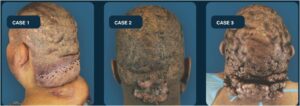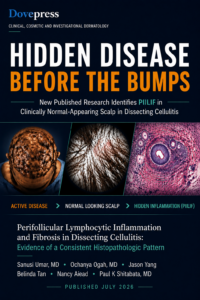
John Picone’s journey began after years of living with a painful scalp condition called acne keloidalis nuchae that affected nearly every part of his life. What started as bumps on the back of the head gradually evolved into severe inflammation, limiting what he could do physically and damaging his confidence.
A traumatic car accident in the past had already left him struggling emotionally, and the worsening scalp issues only deepened that challenge. Because John’s case involved complex scalp pathology—including acne keloidalis nuchae (AKN), folliculitis decalvans (FD), and cutis verticis gyrata (CVG), his treatment would require a multidisciplinary, long-term solution that addressed both his physical symptoms and emotional well-being.
This would require a multidisciplinary treatment plan that addressed both his medical needs and his emotional well-being.
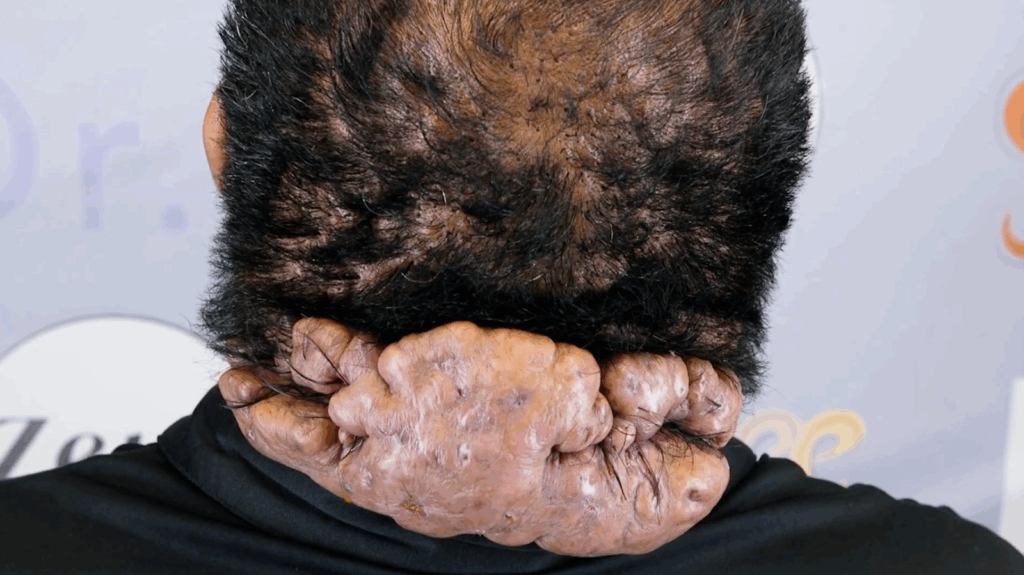
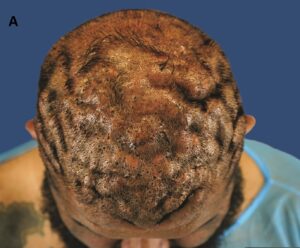
Close-up view of the back of a John’s head showing a severe scalp condition with large, inflamed, nodular masses covering the nape of the neck.
A Specialist Who Saw the Whole Picture
During his evaluation with The Bumpinator, Dr. Sanusi Umar diagnosed John with three advanced scalp conditions occurring simultaneously.
The first was a large inflammatory mass consistent with scalp keloids or acne keloidalis nuchae. The second was cutis verticis gyrata (CVG), which creates deep, folded grooves of skin on the scalp.
The third, and most aggressive, is nodulocystic scalp disease marked by painful scalp lumps, deep cysts, and bumps that drain repeatedly. John’s condition represented the severe end of the clinical spectrum, with chronic inflammation and follicular injury that had been progressing for years.
John shared that previous treatments including antibiotics, topical medications, and dermatology visits did not produce meaningful improvement. The persistent symptoms had caused him significant emotional burden and withdrawal from social life.
He also mentioned the discomfort while lying down due to the spontaneous drainage from the scalp. Additionally, he has been concerned about the appearance of the acne keloidalis nuchae lesions. John’s concerns regarding the appearance of his scalp pathology have negatively impacted his social interactions and have resulted in a diminished quality of life.
The laboratory evaluation included Hemoglobin A1c (HbA1c) testing to assess blood sugar levels and identify individuals who are at an increased risk for developing type II diabetes.
Based upon the results of this test, it was determined that John was at an increased risk for developing type II diabetes and the Dr. U recommended that he begin taking semaglutide (a relatively new medication approved for the treatment of obesity and diabetes).
The decision was made to defer any major surgical interventions on John’s scalp pathology until his weight and metabolic markers were at safe and optimal levels.
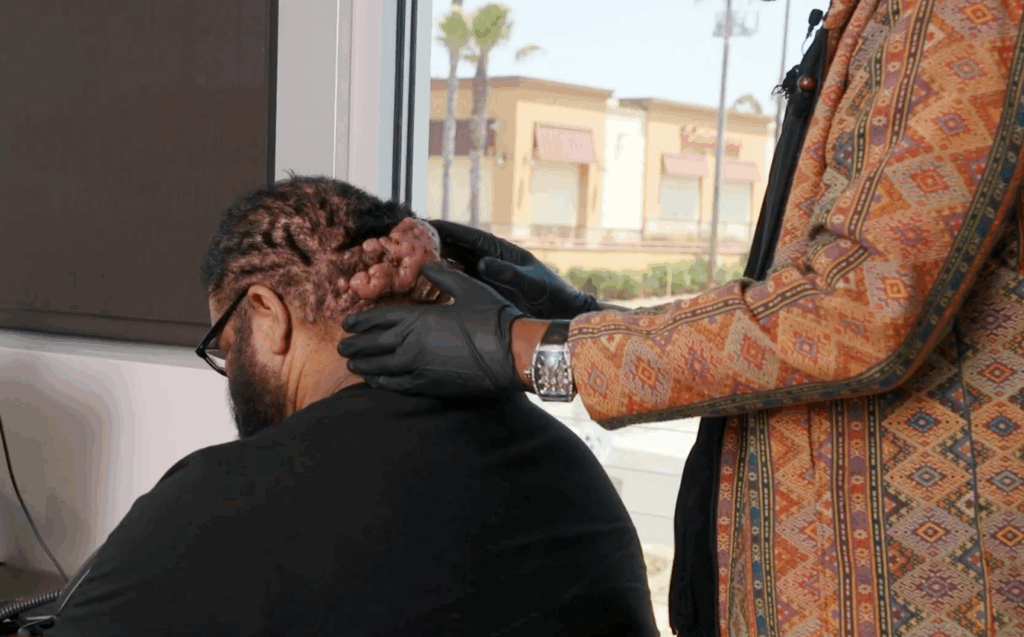
Dr. Sanusi Umar gently examines the back of John’s head, which shows a severe, inflamed scalp condition.
Finding Support: The Human Side of Healing
John’s family had long shared the emotional weight of his condition. They described how the painful scalp lumps, the ongoing drainage, and the cosmetic impact had made John increasingly self-conscious. His avoidance of family gatherings and social spaces reflected just how deeply the acne keloidalis nuchae bumps and scalp deformities had affected him.
John revealed that he had been experiencing similar symptoms since adolescence. Over many years, he consulted dermatologists and specialists, often being told he had simple infections, scalp keloids, or ingrown hairs. After many failed treatments and cycles of drainage, swelling, and painful flare-ups, he felt uncertain about his remaining options.
A referral eventually led him to Dr. Umar, a specialist known for treating advanced cases of tufted folliculitis, chronic folliculitis of the nape, and dissecting cellulitis. Through the Hair Peace Foundation, John was approved for financial assistance, finally giving him access to an in-person evaluation.
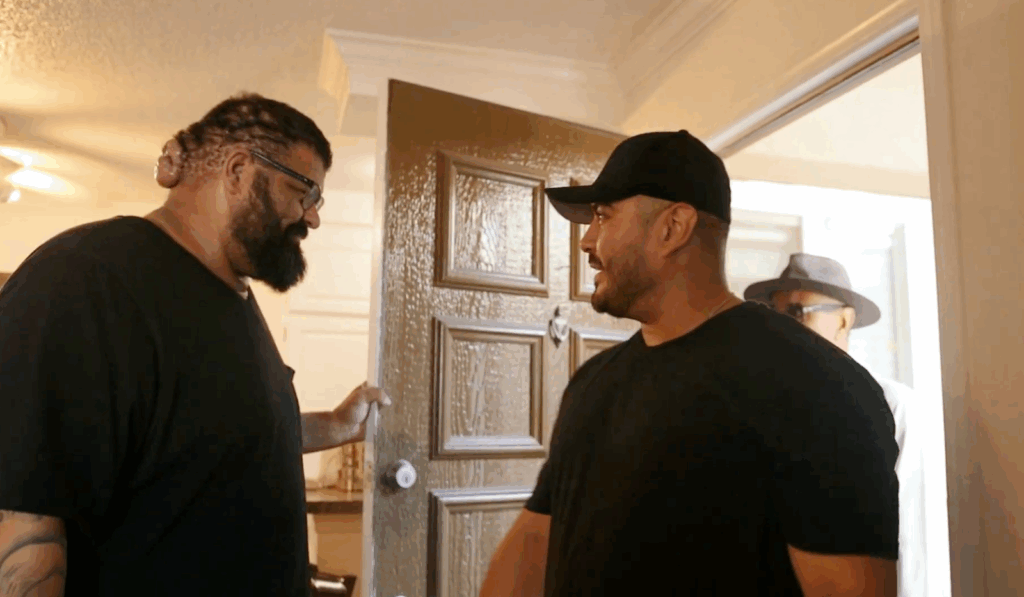
John opening the door for his cousin and uncle who came to visit him at his house.
Lifestyle Changes and the Green Light for Surgery
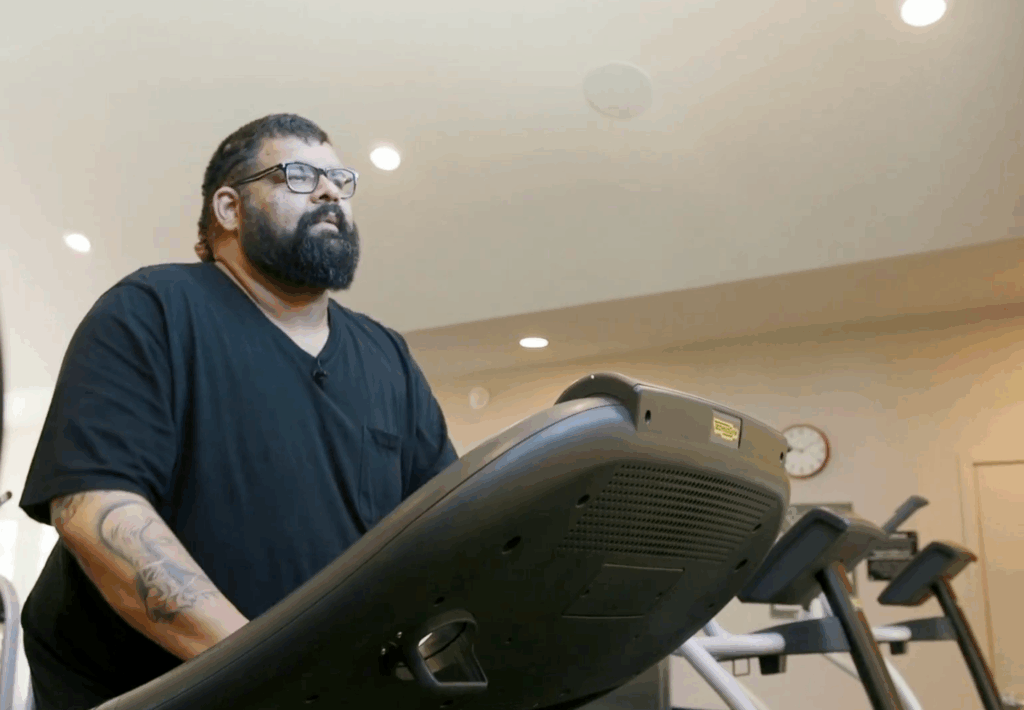
John is walking on a treadmill, representing the lifestyle changes and 72-pound weight loss he achieved in preparation for surgery.
After beginning semaglutide, John began making significant changes to his lifestyle including improving his diet, increasing his level of physical activity and establishing a routine for managing his weight. After approximately 4 months, John documented a total weight loss of approximately 72 pounds and met all of the surgical readiness criteria established by the clinical team.
As John’s overall health continued to improve and the metabolic risk factors associated with his scalp pathology decreased, the clinical team decided to proceed with surgically addressing John’s acne keloidalis nuchae. All pre-surgical assessments indicated that John was stable and Dr. Umar informed John that there were no longer any barriers to proceeding with a definitive treatment of his scalp disease.
Restoring Confidence: Entering Surgery
On the date of the surgery, John arrived with his sister. The clinical team completed a final assessment of John’s weight loss, compliance with treatment and general health status to confirm that he had met the requirements for proceeding with surgery. The surgical procedure was planned to address the chronic inflammation in the scalp mass, the dissecting cellulitis of the scalp, and the resulting deformities that John had endured for nearly 7 years.
John admitted he felt both relieved and nervous, but for the first time in years, he believed he was finally receiving a real, evidence-based treatment for bumps on the back of the head—a condition that many people mistakenly dismiss as “barber bumps” or cysts.
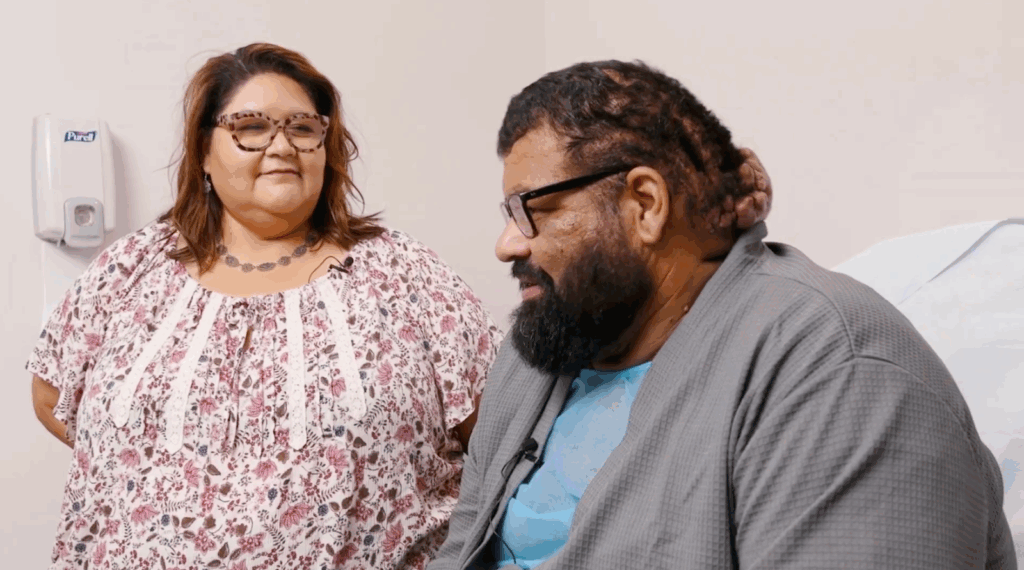
John sits next to his sister in a hospital room. His sister came on the day of his surgery to offer support.
A New Beginning
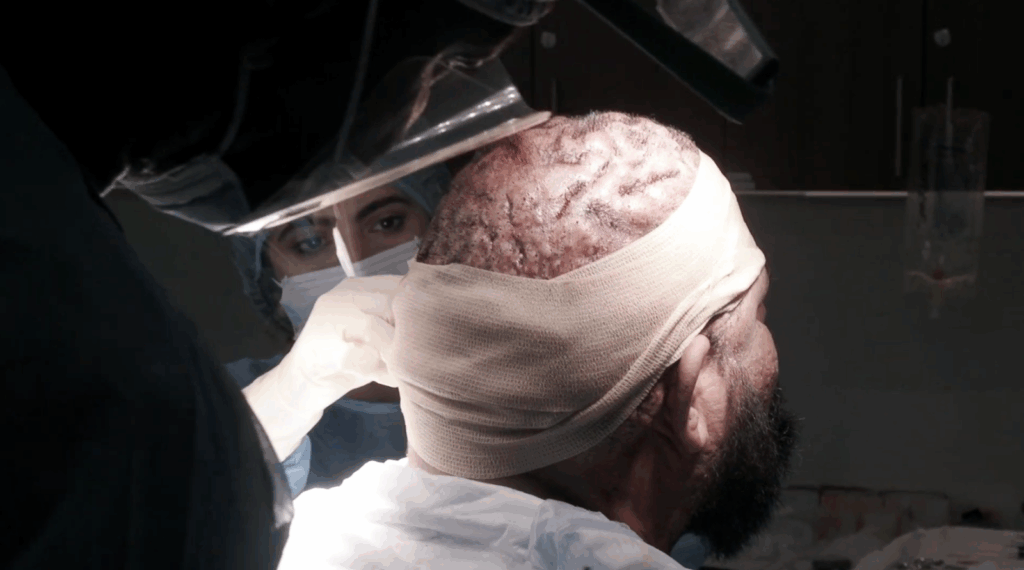
Dr. Umar performed an intricate operation to remove the AKN lesion, eliminating the source of chronic inflammation believed to be driving the deep nodules, cysts, and draining bumps associated with dissecting cellulitis.
To promote wound healing and support regeneration of skin and underlying tissues, Dr. Umar applied nanofat enriched with stem cells, processed from John’s own fat tissue.
After surgery, the Bumpinator reported that the surgery went very well and achieved a natural look for the back of John’s head. After the surgery, John felt good, and he was ready to put the days of being worried about people staring at him behind him and get back to his outgoing personality.
Watch John’s Story
🎥 Watch the full episode of John’s transformation in our Bumpinator Docuseries here:
Also watch on Instagram.
Stay Tuned
Watch out for the next episode of the Bumpinator Docuseries, where Dr. Umar meets Festus, a man who has lived with extreme keloids most of his life.
Take the Next Step
If you or someone you know is struggling with Folliculitis Decalvans or Acne Keloidalis Nuchae (AKN), don’t wait. Early intervention and expert care can change lives.
Fill out our free online consultation form to have your case personally reviewed by Dr. Sanusi Umar.
Individual results may vary. This story reflects one patient’s personal experience with Folliculitis Decalvans and treatment with Dr. Umar. Consult with a qualified physician for personalized advice.