


What is Trichotillomania (Hair Pulling)? Also known as pathological hair pulling, Trichotillomania is the overwhelming repeated urge to pull out one’s hair. It can include removing hair from the scalp, beard, eyelashes, eyebrows, and, to some extent, from the pubic areas, leaving bald patches.
This disorder is categorized as a mental health issue, classified explicitly under Obsessive Compulsive Disorder (OCD), Attention Deficit Hyperactivity Disorder (ADHD), anxiety, and depression.
Hair pulling is classified as part of the focused repetitive disorders. In most cases, Trichotillomania remains undiagnosed because many people are unaware of its existence and often term it as just ‘bad habits.’
Forms of Trichotillomania (Hair pulling)
Hair pulling is classified into:
- Focused: This is intentionally pulling out your hair for various reasons, such as to relieve distress or tension.
- Automatic: Often happens subconsciously without you noticing you are doing it.
- Both focused and automatic hair pulling: Some people exhibit both focused and automatic forms of hair pulling. In this case, triggers such as combing your hair may apply depending on your mood and situation.
What Causes Trichotillomania (Hair Pulling)?
Experts do not know what causes Trichotillomania, but doctors have established that the disorder can be related to negative or positive emotions. Some patients claim they pull their hair to deal with strong emotions.
Hair specialists have, however, ascertained that certain factors may increase the risk of developing Trichotillomania:
- Genetics: Some genes (yet to be confirmed further through research) might make it more likely to pull out your hair repeatedly. In that same case, if a first-degree family member has the disorder, it is also more likely to have it.
- Hormones: Besides the genetic effect, stress and puberty hormones can trigger the behavior in those with the factors above.
- Past traumas: With little research to support this, healthcare providers believe that there is a higher likelihood of developing the hair-pulling disorder for people who have experienced childhood trauma.
- Habit learning: Trichotillomania patients constantly urge themselves to pull their hair. Once they give in to the urge, they feel a sense of relief, which the brain registers as a reward. In the case of dopamine, the person forms a hard-to-quit habit.
Symptoms of Trichotillomania (Hair pulling)
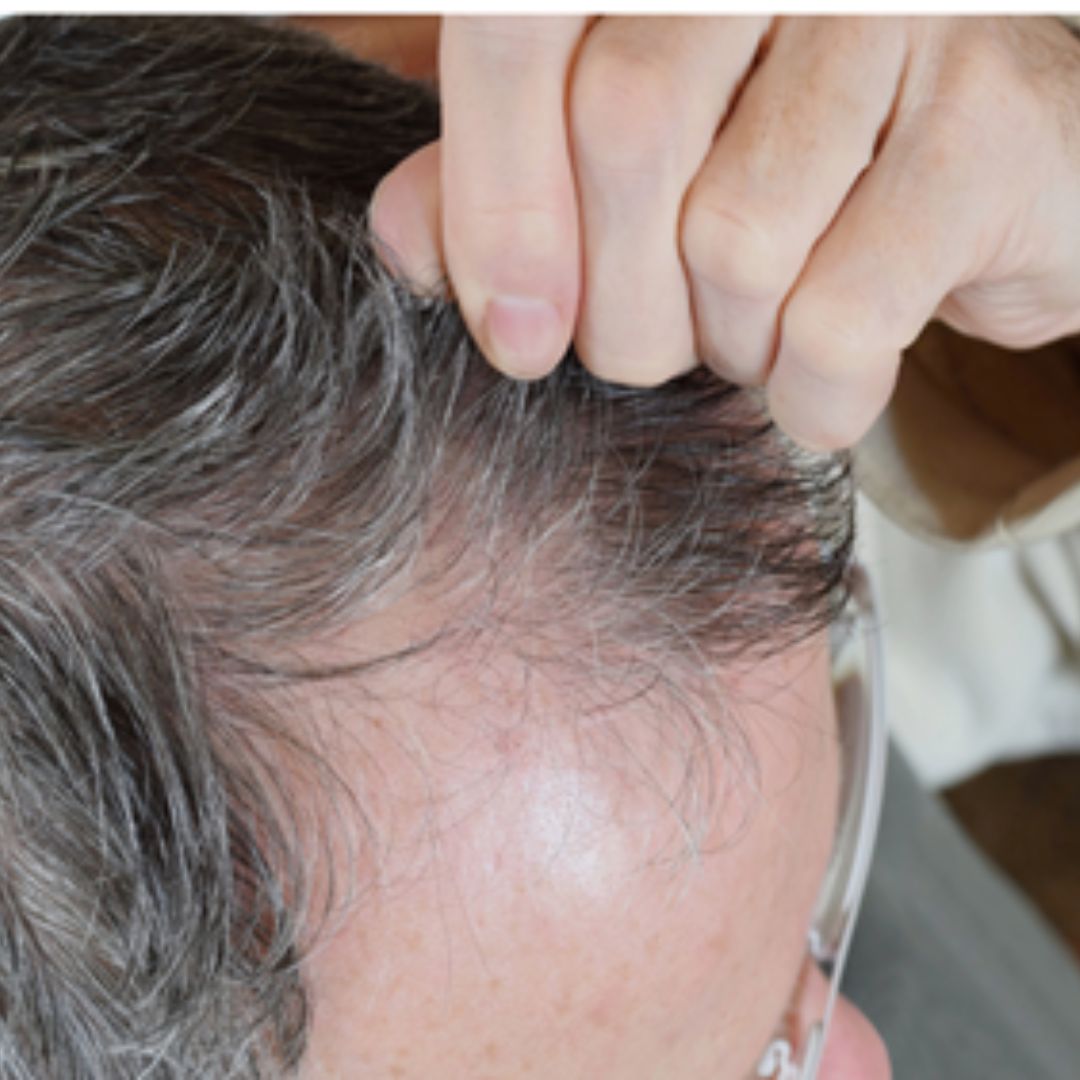
Pulling out hair is the main symptom of Trichotillomania.
In addition to the hair pulling, a specialist can observe other symptoms that are associated with the condition:
- Tension when you resist the urge to pull out your hair.
- Relief after pulling the hair.
- Sore skin, often accompanied by itching, increases the urge to pull the hair out.
- Scarring Eating the pulled-out hair.
- Patched balding.
Specialists on both skin, hair, and mental health practice relate hair pulling with other repetitive behaviors:
- Skin picking
- Nail biting
- Lip chewing
- Trichophagia (Eating hair or nails pulled from your body)
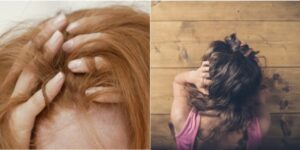
What Does Trichotillomania Look Like?
How Do You Diagnose Trichotillomania (Hair Pulling)?
A skin or hair doctor or a mental health practitioner can conduct a hair-pulling diagnosis.
There are no particular tests for Trichotillomania. However, a specialist can diagnose the condition in several ways, including answering questions to monitor one’s stress levels, habits, and experiences during those habits.
Some doctors conduct a punch biopsy, which involves taking out a piece of your skin and hair to assess the damage caused and observing under a microscope for other hair and skin conditions.
Once the specialist has made a positive diagnosis, you will need to consult a therapist, psychologist, or psychiatrist to treat or manage the mental health aspect of the condition.
How do you treat Trichotillomania (Hair pulling)?
Hair pulling can be treated and managed through therapy, medication, and self-care.
Therapy
- Habit reversal therapy:
The first step is ensuring the patient is aware of their habit and training them to identify the triggers and how to stop when in action. Then, reward or praise them when they successfully avoid the hair-pulling.
Afterward, we introduce a competing response in place of hair-pulling. Specialists recommend that the alternative activity be exciting and captivating to prevent the patient from feeling the urge to pull their hair.
Finally, people with such conditions require social support.
- Cognitive therapy:
Commonly used in the management of depression and anxiety, this form of therapy helps to change beliefs that lead to hair pulling.
Medication
There are no FDA-approved medications for Trichotillomania treatment. Doctors, however, use certain drugs to manage the symptoms:
- Antipsychotics
- Antidepressants
- Acid supplements such as N-acetyl cysteine.
Frequently Asked Questions (FAQ) on Trichotillomania (Hair pulling)
Why can’t I stop thinking about pulling my hair out?
This can be a sign of Trichotillomania. However, many people pull out their hair as a way of processing solid emotions such as stress and anxiety.
What triggers Trichotillomania?
The most common triggers are genetics or hormonal imbalances.
Does the hair grow back after Trichotillomania?
If you can stop pulling out your hair thoroughly, hair regrows.
How long does Trichotillomania last?
It is different from patient to patient; however, it can last from months to years.
Learn more about hair loss conditions (Alopecia) here.
References
Grzesiak, M, et al. “Trichotillomania among Young Adults: Prevalence and Comorbidity.” Acta Dermato Venereologica, vol. 97, no. 4, 2017, pp. 509–512, https://doi.org/10.2340/00015555-2565. Accessed 3 Jan. 2020.
Howard, Andrew K., et al. “Treatment of Huntington Disease and Comorbid Trichotillomania with Aripiprazole.” The Journal of Neuropsychiatry and Clinical Neurosciences, vol. 27, no. 3, July 2015, pp. e211–e212, https://doi.org/10.1176/appi.neuropsych.14090232. Accessed 7 Feb. 2022.
Kim, Whan B. “On Trichotillomania and Its Hairy History.” JAMA Dermatology, vol. 150, no. 11, 1 Nov. 2014, p. 1179, https://doi.org/10.1001/jamadermatol.2014.2284.
Reneta Slikboer, et al. Systematic Review of Published Primary Studies of Neuropsychology and Neuroimaging in Trichotillomania. Vol. 24, no. 2, 24 Aug. 2017, pp. 188–205, https://doi.org/10.1017/s1355617717000819. Accessed 4 Aug. 2023.


