


Choosing the right method for closing an area after a complex scalp surgery is important for achieving the best medical results and providing patients with the least amount of discomfort possible. For Anwar’s Folliculitis Decalvans, the problem needed a treatment that would cause the least amount of trauma to the scalp while still allowing for a safe and aesthetically pleasing closure. There were two types of methods available, both of which have their own set of challenges.
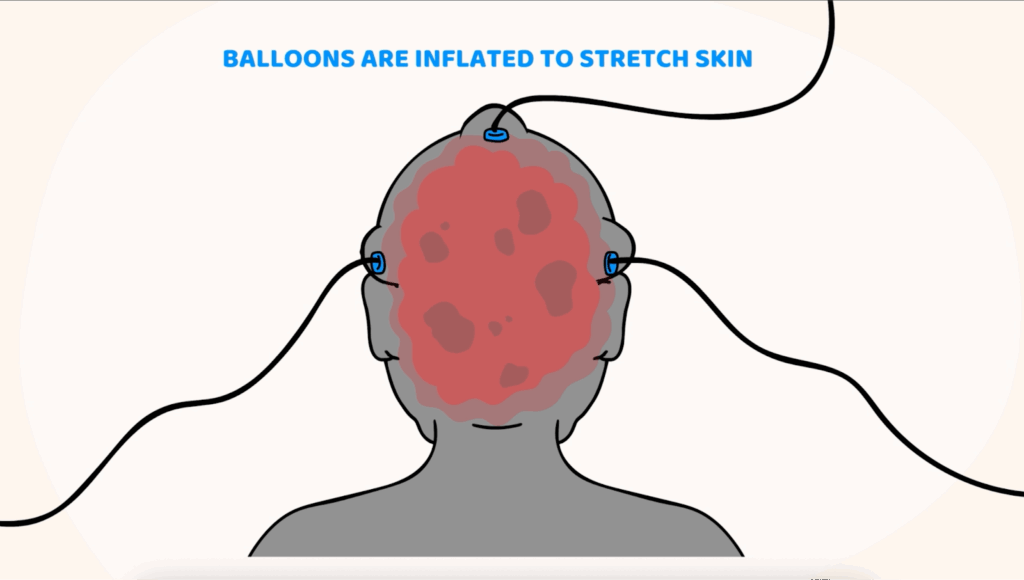
One way to close an area on the scalp after a surgery is through balloon expansion. Balloon expansion involves slowly expanding the surrounding area of the scalp to expand the area enough to close the wound. A significant drawback to this type of closure is that it is extremely invasive, placing a great deal of stress on otherwise healthy scalp tissue. Therefore, many surgeons and dermatologists find it to be a last resort.
A Breakthrough Technique: The Athena Suture Kit
In order to provide his patients with the most efficient, comfortable, and successful closure, Dr. Sanusi Umar uses the Athena Suture Kit for scalp closures. This was developed by Dr. U as a solution to the problems associated with traditional closure techniques.
Unlike the balloon expansion method, the Athena Suture Kit does not require the surgeon to stretch the remaining unaffected portions of the scalp; therefore, it creates less surgical trauma and less post-surgical pain for the patient.
Research & Scalp Health
According to Dr. Umar’s previously published research, the visible lesion is generally only the tip of the iceberg when it comes to Folliculitis Decalvans. Oftentimes, the surrounding scalp tissue has been put into a pre-diseased state.
Because the pre-diseased tissue can become diseased at the slightest provocation (i.e., increased trauma from previous procedures), using a closure technique such as the balloon expansion method increases the likelihood of disease recurrence.
The use of the Athena Suture Kit decreases the length of time that it takes for patients to recover from surgery. Additionally, it maintains the health of the surrounding scalp tissue. This supports Dr. Anwar’s goal of preventing disease recurrence in cases such as Folliculitis Decalvans and Acne Keloidalis Nuchae (AKN), which are both existing on Anwar’s scalp before the successful surgery.
Alt Text / Caption/image title attribute:
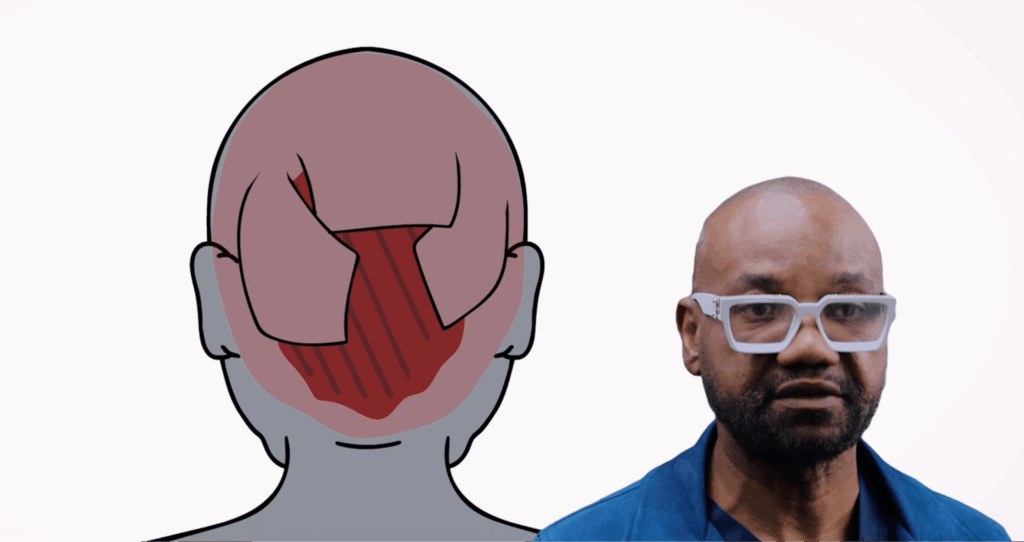
Dr. Umar explains that the trauma caused by the balloon expansion method can cause inflammation that eventually creates new Folliculitis Decalvans.
Watch Anwar’s Story
🎥 Watch the first chapter of Anwar’s transformation here:
• Also available on Instagram and TikTok
Take the Next Step
If you or someone you know is struggling with Folliculitis Decalvans (FD), don’t wait. Early intervention and expert care can change lives.
Fill out our free online consultation form to have your case personally reviewed by Dr. Sanusi Umar.
Individual results may vary. This story reflects one patient’s personal experience with Folliculitis Decalvans (FD) and treatment with Dr. Umar. Consult with a qualified physician for personalized advice


