
Flaking, scaling, or redness can look like ordinary dandruff. In this short video, Dr. Sanusi Umar explains why those signs may raise a different question when they occur with androgenetic alopecia or pattern baldness.
“Dandruff by itself may just be dandruff.” Dr. Sanusi Umar begins with that simple distinction. The concern changes when dandruff-like scaling or redness appears in someone who also has AGA, or pattern baldness. In that setting, the short video asks whether the visible flakes are telling the whole story.
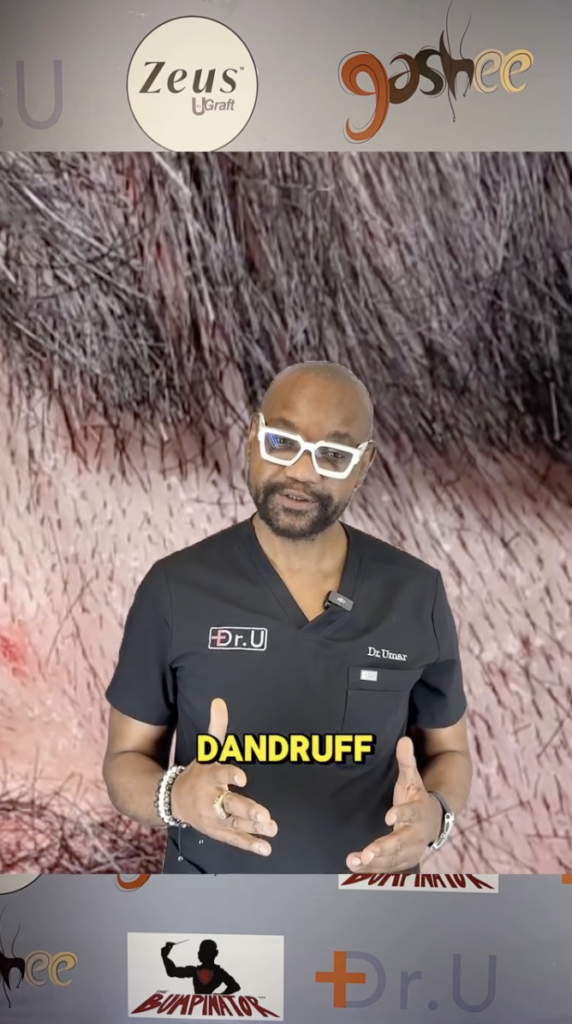
When Dandruff-Like Signs Appear With Pattern Hair Loss
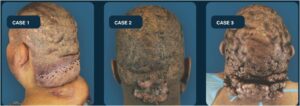
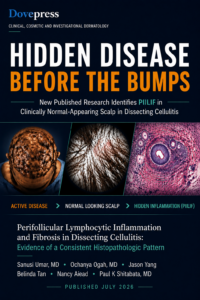
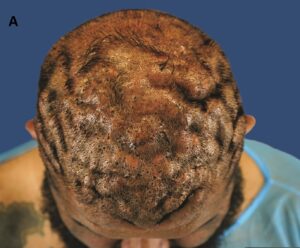
In the study described in the video, many patients with dandruff-like signs did not have true seborrheic dermatitis on biopsy. Instead, Dr. Umar says the biopsy showed PIILIF, which he describes as a hidden inflammatory and early fibrotic pattern around the hair follicles.
That finding matters because, according to the video, the pattern “may affect hair loss treatment response.” The message is deliberately narrower than saying every case of dandruff hair loss represents PIILIF. Rather, the combination of recurring scalp signs, pattern hair loss, and an unsatisfactory treatment response may justify looking more closely at what is happening around the follicles.
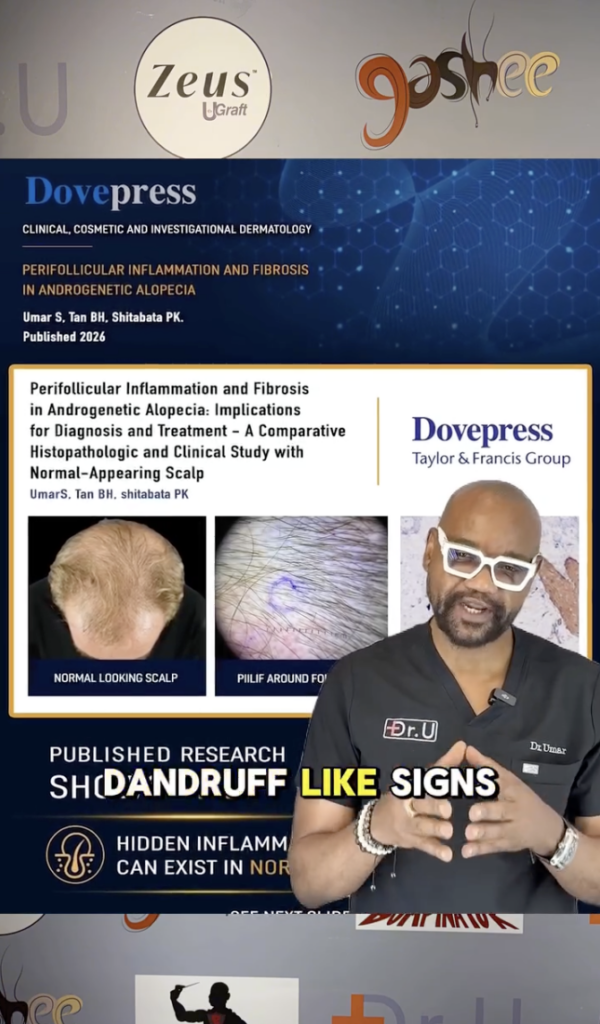
Look Beyond the Flakes When Hair Loss Is Not Responding
The practical point of the short is not simply to remove visible scaling. The approved caption states that when PIILIF goes unrecognized, it may help explain why some patients continue losing hair even while following a treatment plan. Dr. Umar’s advice in the video is direct: “Don’t just treat the flakes. Check the scalp biology.”
That perspective can also matter when someone is focused on a bald patch on scalp or considering next steps for ongoing hair loss. The video does not provide a universal diagnosis or treatment formula. It emphasizes individualized evaluation when scalp irritation keeps returning while hair continues thinning.
The Takeaway
Ordinary dandruff can occur on its own. But in the context described by Dr. Umar, dandruff-like scaling or redness alongside AGA may warrant a closer look. If hair loss is not responding as expected, the next question may be less about the flakes themselves and more about the biology beneath the surface of the scalp.
Watch the Short Video
Watch on YouTube Shorts | Instagram | TikTok
Take the Next Step
Learn more: Restoring Hair With the uGraft Procedure
Free ConsultationMedical disclaimer: This article is for educational purposes only and is not medical advice. Dandruff-like signs do not establish PIILIF or any other diagnosis. Every patient should be evaluated individually.
Further Reading
- https://dru.com/is-dandruff-seborrheic-dermatitis-a-cause-of-hair-loss-and-poor-hair-transplant-outcomes/
- Umar S. and Carter M.A Multimodal Hair-Loss Treatment Strategy Using a New Topical Phytoactive Formulation, Case Reports in Dermatological Medicine / 2021
https://www.hindawi.com/journals/cridm/2021/6659943/