


A change in the scalp can first be noticed by someone else. In this Baldcast conversation about lichen planopilaris, a physician describes how her hairdresser spotted something unusual before she herself recognized any change. The observation seemed small at the time, but she now remembers it differently.
The First Observation Came From Her Hairdresser
Speaking with Dr. Sanusi Umar, the guest explains that she had always had very full hair. She grew up in a large family with many sisters, each with slightly different hair. That familiar fullness was part of why a small change did not immediately stand out to her.
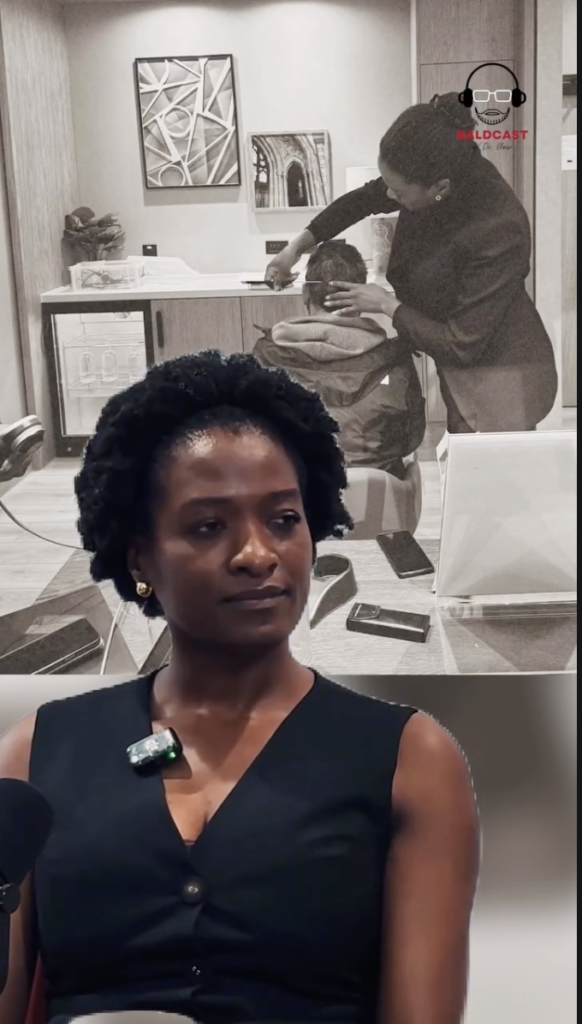
Her hairdresser, however, noticed something different. The guest remembers a casual comment about a spot that “just wasn’t quite right.” She did not treat the remark as urgent. As she puts it, “I didn’t pay that much attention to it because life’s busy.”
Why a Change at the Back Can Be Missed
The guest explains that the area was toward the back of her scalp, where she could not easily see it herself. With her hair remaining full, she did not notice what her hairdresser had observed. Her account illustrates a simple difficulty: people do not always have a clear view of every part of their own scalp.
Dr. Umar responds with a light remark about hairstylists and barbers being the ones to deliver unwelcome news. She pushes back affectionately, calling her own hairdresser brilliant and acknowledging that she was the one who noticed the difference.
A Conversation She Wishes Had Gone Further
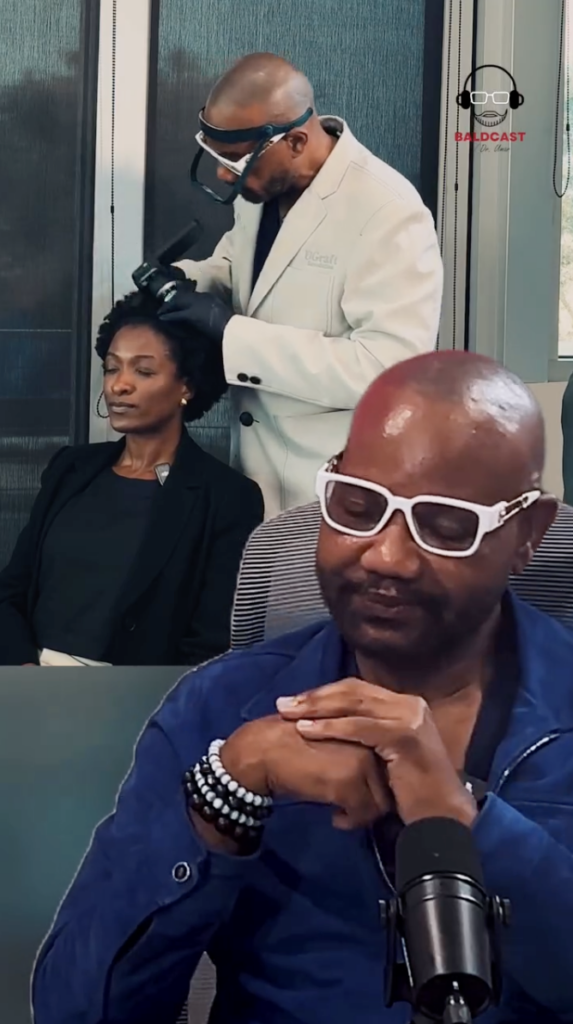
Looking back, the guest does not criticize her hairdresser for noticing the spot. Instead, she wishes the observation had led to a more direct conversation. “I wish she had felt empowered enough to speak more,” she says, referring to what her hairdresser saw.
That distinction matters to the story. The hairdresser was not being asked to diagnose a scalp disease or decide on hair restoration. She had simply noticed something unfamiliar in an area the guest rarely examined. The guest now sees value in having those observations voiced clearly.
The Value of Speaking Up
This chapter focuses on the moment before the guest fully understood the change: a brief comment, a busy life, and a spot she could not readily see. It does not establish when her lichen planopilaris began or what treatment followed. Instead, it captures her retrospective wish that the first observation had prompted more discussion.
The Baldcast conversation continues beyond this early moment in her story, with Dr. Umar guiding the discussion of her experience.
Watch the Chapter
Take the Next Step
Free Consultationhttps://dru.com/hair-surgery-hair-loss-medication-services/
Medical Disclaimer
This article is for educational purposes only and describes one person’s experience. It is not a diagnosis or a substitute for individualized medical advice.
Further Reading
- https://dru.com/eleojo-lichen-planopilaris-pattern-baldcast/
- Umar S, Kan P, Carter MJ, Shitabata P, Novosilska M. Lichen Planopilaris Responsive to a Novel Phytoactive Botanical Treatment: A Case Series. Dermatol Ther (Heidelb). 2022 Jul;12(7):1697-1710. doi: 10.1007/s13555-022-00749-3. Epub 2022 Jun 8. PMID: 35674981; PMCID: PMC9276860.
https://pmc.ncbi.nlm.nih.gov/articles/PMC9276860/


