


Two common questions about John’s scalp condition were simple: Is it a lipoma? Is it a tumor? Dr. Sanusi Umar explains why the answer depends on distinguishing a benign fatty growth from a very different group of inflammatory scalp diseases.
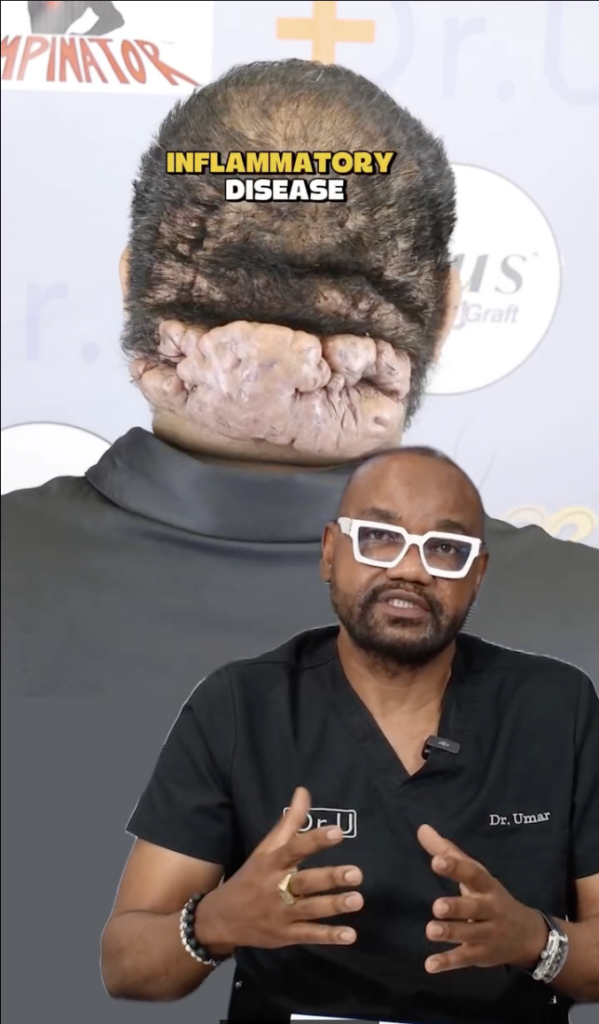
“Is it a lipoma?” “Is it a tumor?” Those questions open Dr. Umar’s short explanation of John’s condition. A lipoma, he explains, is a benign tumor made up of fat cells. John’s diagnosis is different. The supplied account identifies three inflammatory scalp conditions: Acne Keloidalis Nuchae, Dissecting Cellulitis, and Cutis Verticis Gyrata.
Acne Keloidalis Nuchae Is Not a Lipoma
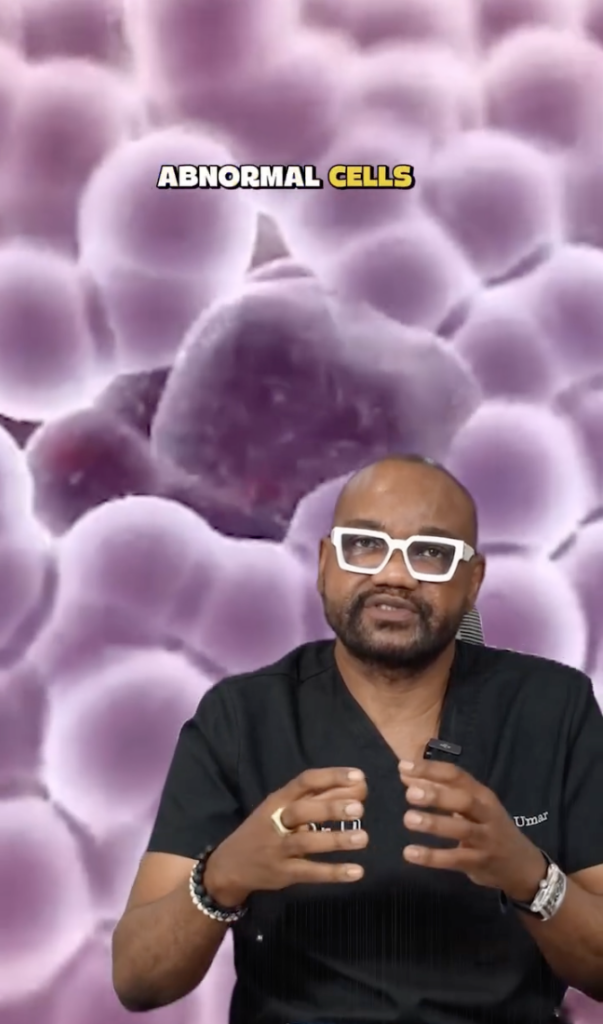
Dr. Umar draws a clear distinction between a lipoma and the disease process affecting John. He explains that a tumor is a collection of abnormal cells and that a lipoma is a benign tumor composed of fat cells. By contrast, he describes John’s condition as inflammatory rather than a fatty growth.
That distinction is clinically important because appearances alone can be misleading. In John’s case, the diagnoses named in the video are Acne Keloidalis Nuchae, Dissecting Cellulitis, and Cutis Verticis Gyrata. The point of the explanation is not to diagnose by sight, but to show why the correct diagnosis matters before treatment decisions are made.
Dissecting Cellulitis and Cutis Verticis Gyrata Add to the Clinical Picture
The video describes John’s inflammatory scalp disease as involving constant pain, tenderness, soreness, and bloody or sometimes foul-smelling discharge. Dr. Umar sums up the burden plainly: “just misery.” These details explain why the condition cannot be reduced to a cosmetic bump or assumed to be a lipoma based only on surface appearance.
Why Accurate Diagnosis Matters
The central takeaway is diagnostic accuracy. A visible scalp mass or enlarged area can prompt assumptions about tumors, but John’s case illustrates that a very different disease process may be responsible. Dr. Umar’s explanation places the emphasis on identifying the underlying condition rather than naming it from appearance alone.
For patients with concerning scalp changes, this short is an educational example rather than a diagnostic guide. John’s experience is individual, and results can vary. Evaluation by an appropriate clinician is necessary to determine what a particular scalp finding represents and what care may be appropriate.
Watch the Short Video
Watch on YouTube Shorts | Instagram | TikTok
Take the Next Step
Learn more about Acne Keloidalis Nuchae: AKN bumps on the back of the head and neck
Free ConsultationMedical disclaimer: This article is for educational purposes only and does not provide a diagnosis or individualized medical advice. This is one patient’s experience. Results can vary. Treatment decisions should be based on an appropriate clinical evaluation and individualized medical guidance.
Further Reading
- Umar, S., & Sila, C. R. (2021). Acne keloidalis nuchae: A role for low-dose radiotherapy. JAAD Case Reports, 13, 90–93. https://doi.org/10.1016/j.jdcr.2021.05.008
- https://dru.com/acne-keloidalis-nuchae-dissecting-cellulitis-john-case/


