


Maria’s treatment for folliculitis decalvans did not begin with a hair transplant. In this Baldcast chapter, Dr. Sanusi Umar asks viewers to focus on the sequence: diseased tissue was surgically excised, the scalp was stabilized, tattooing was used during healing, and three years later transplantation followed. The result shown in the video comes after that staged approach.
Treatment Started Before Hair Restoration
Dr. Umar makes the order of treatment the central point of the chapter. Maria had folliculitis decalvans, and the first step was not restoration. According to the video, the affected tissue was surgically excised before the scalp moved into the next stages of care.
Folliculitis decalvans is presented here as an inflammatory condition that can destroy follicles and lead to scarring alopecia. In Maria’s case, the sequence presented here is specific: removal of diseased tissue first, followed by stabilization of the scalp. That order is the key context for understanding how to treat folliculitis decalvans in this individual case.
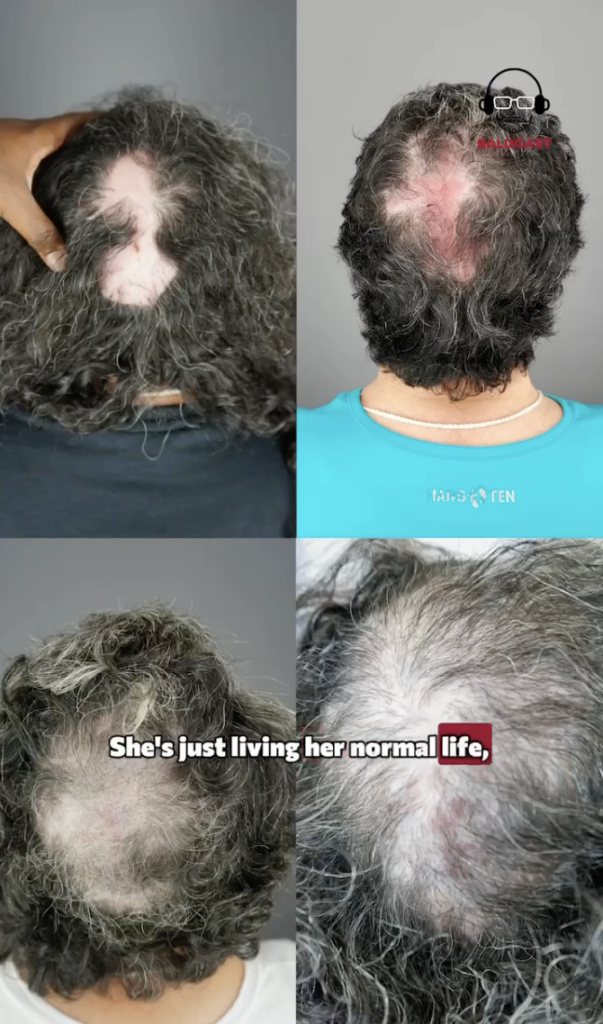
Tattooing Came Before Transplantation
After the scalp was stabilized, tattooing was used to restore appearance during healing. The transplant came later. Dr. Umar states that Maria was the first to have her folliculitis decalvans surgically excised, tattooed, and then successfully transplanted three years later.
He also states that at that point there was “no evidence of the disease.” The chapter therefore presents the transplant as one part of a longer treatment sequence, not the starting point. It also avoids suggesting that restoration alone is one of the ways to protect remaining follicles without first considering the condition of the scalp.
From Procedures to Maintenance
The final stage described in the video is maintenance. Dr. Umar says Maria is now using topical botanicals that were given to her to help maintain her health. He summarizes the change simply: “She’s just living her normal life.”
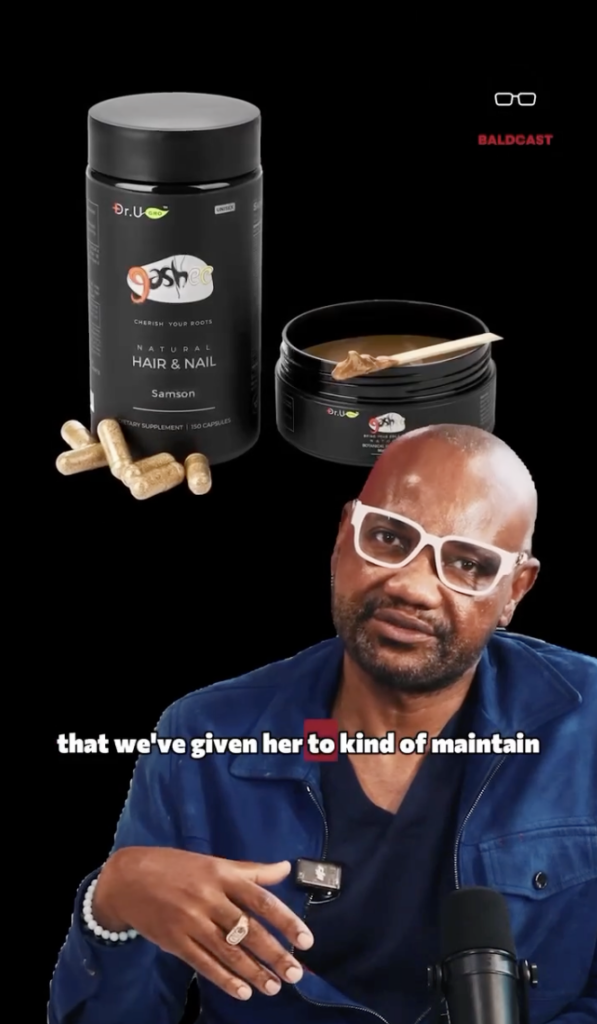
For Maria, the story in this chapter is defined by timing and order: excision, stabilization, tattooing, transplantation three years later, and then maintenance. The next chapter will continue her Baldcast story.
Watch the Chapter
Watch Maria’s Baldcast chapter on YouTube
Take the Next Step
Free ConsultationMedical disclaimer: This article describes one patient’s experience and is provided for educational purposes only. Individual circumstances and results vary. It is not a substitute for individualized medical advice.
Further Reading
- https://dru.com/tufted-folliculitis-maria-care-moved-fast/
- Umar S. and Carter M.A Multimodal Hair-Loss Treatment Strategy Using a New Topical Phytoactive Formulation, Case Reports in Dermatological Medicine / 2021
https://www.hindawi.com/journals/cridm/2021/6659943/


