


Months after a hair transplant, persistent redness can raise an important question: is the scalp still simply healing, or does the inflammation deserve a closer look?
One of the most commonly overlooked patterns I evaluate is PIILIF. The question matters because some patients continue to show redness long after hair transplant surgery, even when that redness has been assumed to be part of the normal healing process.
That assumption is exactly what led me to look more closely. Why do certain patients remain inflamed months after surgery while others do not? In some cases, we believe the answer may involve ongoing inflammation, a phenomenon we call PIILIF.
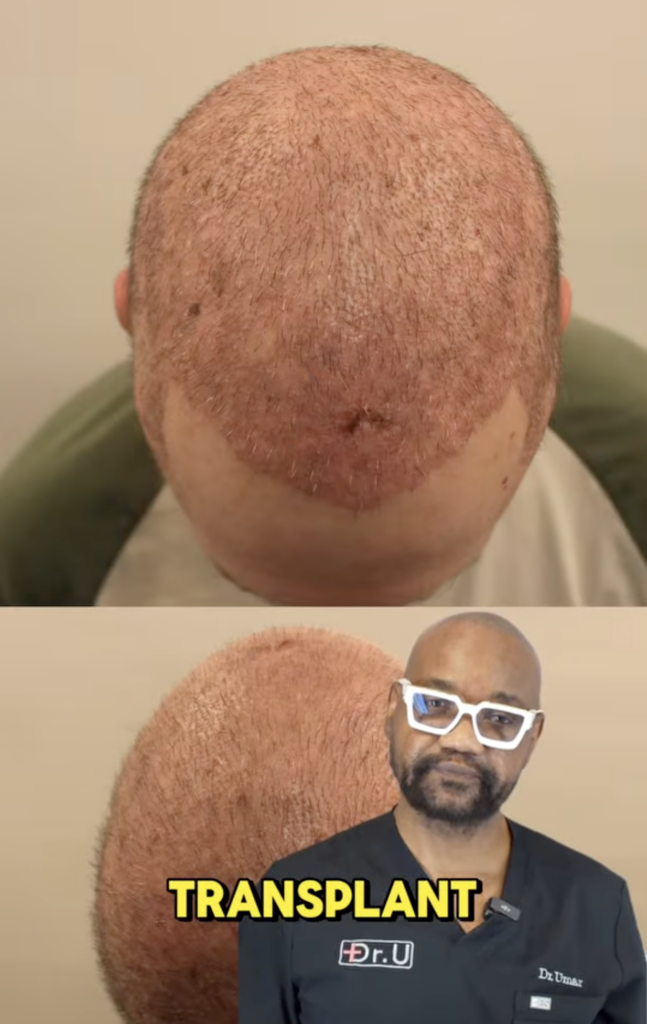
When Persistent Redness Deserves Another Look
For years, persistent redness after a hair transplant could be interpreted as simply part of healing. The short video asks viewers to reconsider that assumption when inflammation continues well beyond the expected recovery period described in the patient’s course.
PIILIF is the term I use for a pattern of ongoing inflammation that may be relevant in some of these cases. This does not mean that every patient with redness has the same explanation. Every patient should be evaluated individually, and the presence of persistent redness is a reason to ask questions rather than make assumptions.
Why PIILIF May Matter for Hair Transplant Healing
Understanding the biology behind persistent inflammation may help explain why healing and long-term results can differ from one person to another. That is the larger point of recognizing PIILIF: an outward sign that appears persistent may warrant a closer evaluation of what is happening in the scalp.
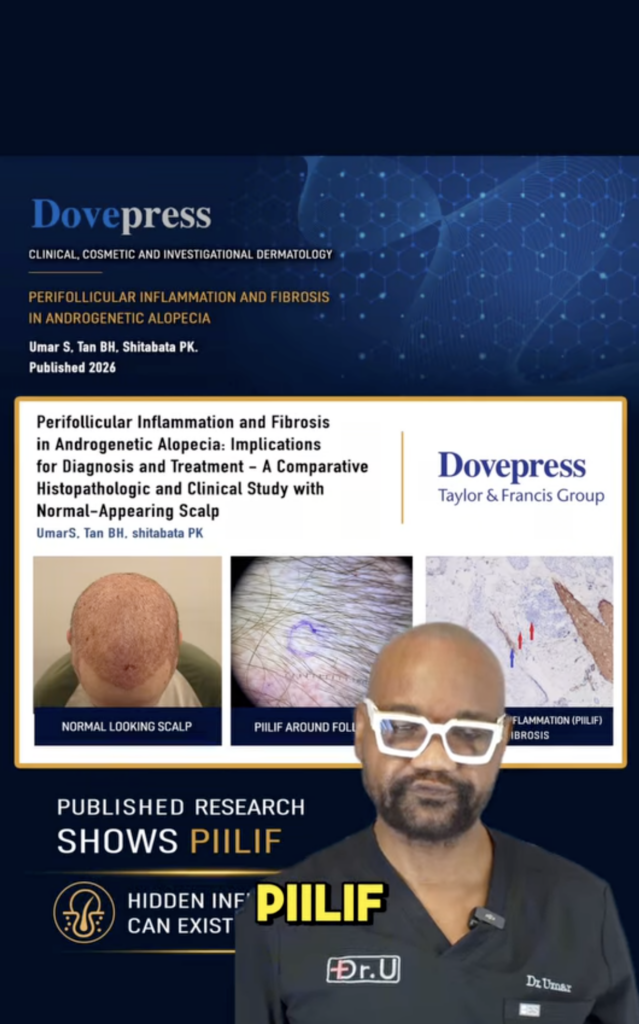
A Question Worth Evaluating
The practical takeaway is straightforward: persistent redness should not automatically be dismissed. If inflammation continues months after a hair transplant, the individual pattern deserves evaluation. PIILIF is one of the patterns I consider when asking why healing may be different from one patient to another.
Recognizing that possibility is not the same as making a diagnosis from appearance alone. It is an invitation to look more carefully at persistent inflammation and to evaluate each patient on their own clinical findings.
Watch the Short Video
Watch Dr. Sanusi Umar explain PIILIF and persistent redness after hair transplantation.
Take the Next Step
Explore the related PIILIF research page: PIILIF research and clinical context
Also available on Instagram and TikTok.
Medical disclaimer: This content is educational and not medical advice. Every patient should be evaluated individually.
Further Reading
- https://dru.com/unveiling-a-shared-precursor-condition-for-acne-keloidalis-nuchae-and-primary-cicatricial-alopecias/
- Umar S, Tan BH, Shitabata PK. Perifollicular Inflammation and Fibrosis in Androgenetic Alopecia: Implications for Diagnosis and Treatment – A Comparative Histopathologic and Clinical Study with Normal-Appearing Scalp. Clin Cosmet Investig Dermatol. 2026;19:548520 https://doi.org/10.2147/CCID.S548520


