


PP405 is generating interest as a possible scalp treatment for hair growth, but Dr. Sanusi Umar emphasizes a measured view: follicle biology, safety, durability, and stronger clinical evidence all matter when evaluating its potential.
Why PP405 Still Requires Realistic Expectations
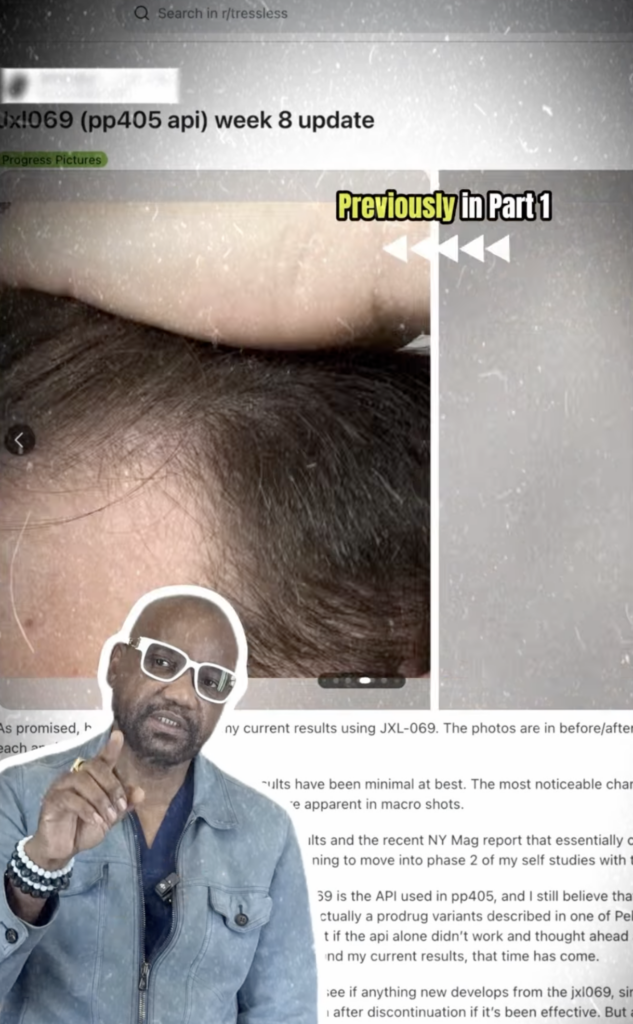
Interest in PP405 centers on the possibility of reactivating hair follicles, but the basic concept of follicle reactivation is not entirely new. In the short video, Dr. Umar points to existing approaches such as minoxidil, finasteride, and microneedling as part of the broader context for efforts to stimulate hair growth.
That context is important because an experimental approach should not automatically be treated as a cure. As Dr. Umar puts it, “We have to keep our expectations realistic.” The study results discussed in the video also did not show the same response in every participant, reinforcing the need to look beyond early enthusiasm.
The Follicle Limit Matters
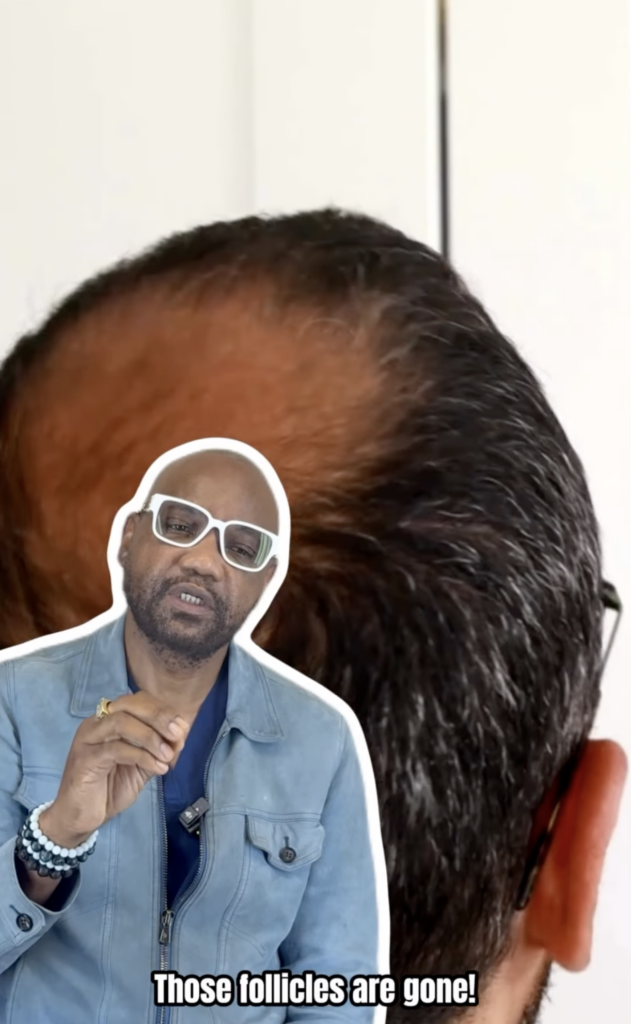
Dr. Umar draws a clear boundary around what a treatment like PP405 could potentially do. If follicles are still present beneath the skin, a drug intended to reactivate them may have something to act on. If follicles are no longer present, however, the expectation changes.
“If the skin’s gone smooth, those follicles are gone. Nothing is bringing them back,” he explains. He also notes that hair loss treatments, including PP405 if it proves useful, may ultimately work best alongside other treatments rather than as a stand-alone answer. For patients considering hair strengthening and scalp health strategies, this distinction between inactive follicles and absent follicles is essential.
Safety and Durability Are Still Open Questions
The video also raises questions about how strongly the targeted metabolic pathway should be pushed. Dr. Umar references research involving a similar family of drugs in which hair follicle stem cells can stall when the mitochondrial pyruvate carrier pathway is pushed too far.
Another unresolved issue is durability. The available discussion does not yet establish whether new growth will last long term. Dr. Umar also cautions against applying such a drug to areas that might be cancerous while safety questions remain.
His conclusion is deliberately restrained: PP405 is a fascinating step, but not a cure. Its true potential will become clearer only after longer and larger studies provide stronger evidence. For now, the most useful approach is to follow the facts and keep expectations proportional to what the research can actually support.
Watch the Short Video
Watch the PP405 short on YouTube
Take the Next Step
Learn more about hair loss medication and hair restoration services
Free ConsultationMedical disclaimer: This content is for educational purposes only and does not replace individualized medical evaluation or treatment advice. Individual circumstances and treatment responses vary.


