


PP405 has attracted attention for its potential role in follicular activation, but enthusiasm must be separated from what the current evidence can establish. Dr. Sanusi Umar explains why the compound remains a developing area of hair restoration rather than a proven long-term solution.
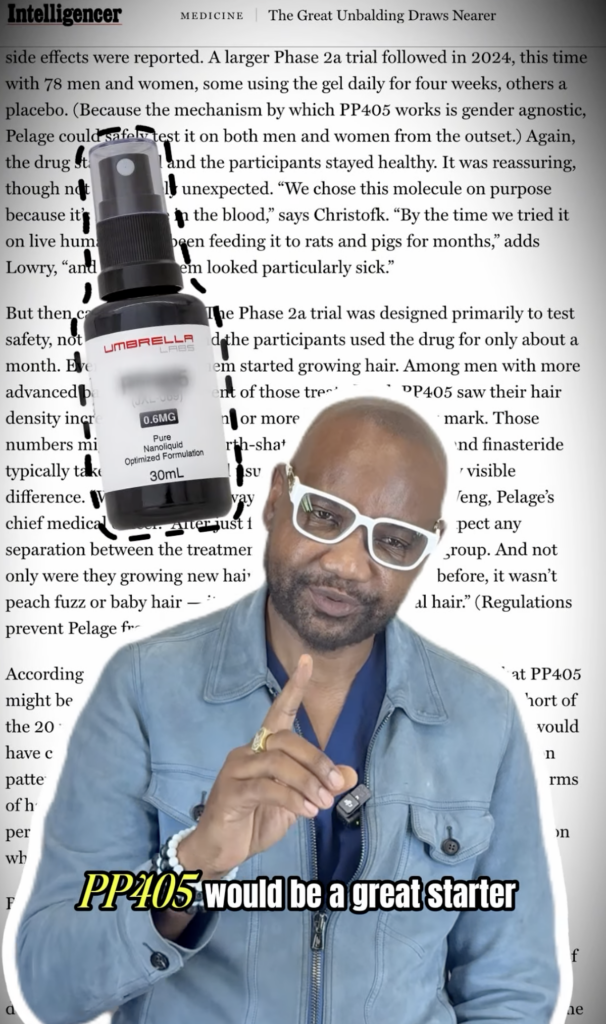
What would PP405 look like if future research confirms that it is both safe and effective? In this short video, I describe it as a possible “great starter” because of its potential for follicular activation. That possibility is worth watching, but it comes with an equally important point: PP405 still needs stronger evidence before it can join established treatment options.
Where PP405 Could Fit in Hair Restoration
The potential advantage discussed in the video is early follicular activation. I contrast that with slower supportive treatments that may build strength over a longer period. In that context, PP405 could eventually have a role as one part of a broader hair restoration strategy rather than as a treatment that answers every need by itself.
“PP405 would be a great starter.”
Why the Evidence Still Has Limits
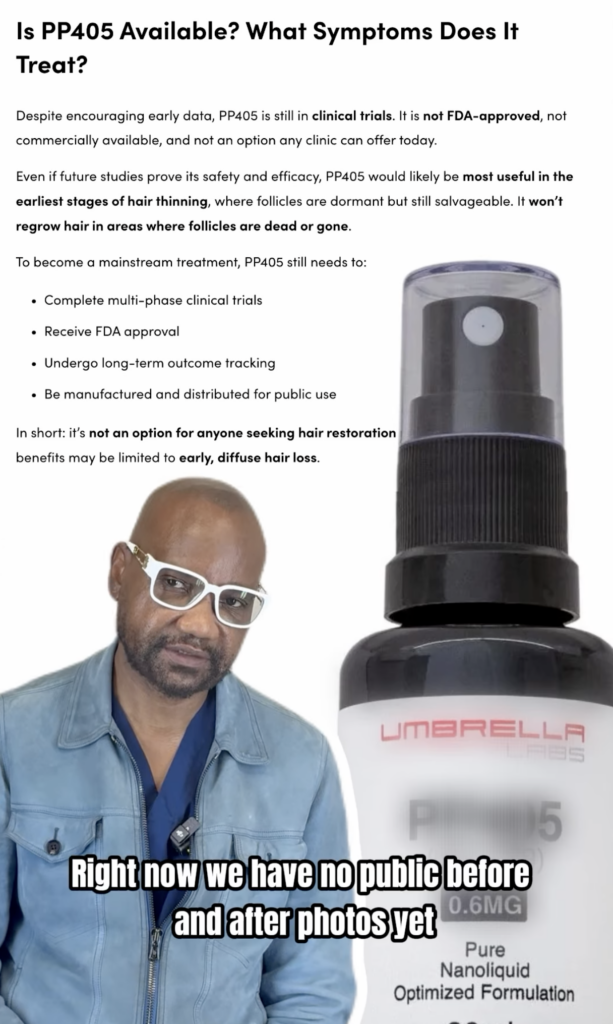
The current limitations are central to the discussion. As I note in the video, there are no public before-and-after photos yet, no long-term durability data, and the trials remain relatively small. Those gaps make it too early to draw firm conclusions about PP405 as a hair growth treatment.
The short also addresses rumors involving black-market versions of mitochondrial pyruvate carrier inhibitors. I caution against jumping ahead of the research because important unknowns remain, including what may happen when the pathway is pushed too vigorously. The video specifically raises concerns about hair thinning and notes questions surrounding the glycolytic metabolic pathway involved.
Keeping Expectations Realistic
The practical message is restraint. Promising early research can justify attention without justifying certainty. PP405 still needs to demonstrate safety and long-term effectiveness, and the available studies need to mature before the compound can be placed alongside trusted approaches.
For patients following new developments in hair restoration, that distinction matters. Interest in a new mechanism should not become a reason to move ahead of the evidence, especially through unverified versions of an investigational compound. For now, the appropriate course is to let the studies progress and keep expectations realistic.
Watch the Short Video
Watch Dr. Sanusi Umar discuss the current evidence and unanswered questions surrounding PP405: YouTube Short
Take the Next Step
Learn more about hair loss medication and hair restoration services: Dr. U Hair Services
You can also view the supplied video on Instagram or TikTok.
Medical disclaimer: This content is for educational purposes only and does not constitute medical advice. PP405 is discussed here in the context of ongoing research. Individual treatment needs vary. Consult a qualified medical professional for personalized evaluation and recommendations.
Further Reading
- https://dru.com/using-nape-hair-for-more-natural-looking-hairline-reconstruction-results/
- Umar S. and Carter M.A Multimodal Hair-Loss Treatment Strategy Using a New Topical Phytoactive Formulation, Case Reports in Dermatological Medicine / 2021
https://www.hindawi.com/journals/cridm/2021/6659943/


