
Persistent bumps after a hair transplant can invite a quick explanation. In this short video, Dr. Sanusi Umar cautions against automatically labeling every bump as routine folliculitis or infection and points instead to the possibility of underlying inflammatory scalp biology.
“Do not assume it is routine folliculitis or pimples.” Dr. Umar opens with that warning when discussing stubborn bumps or abscesses that appear after hair transplantation. He follows it with a second caution: do not assume the problem is simply an infection. The purpose is not to assign a diagnosis from appearance, but to consider whether persistent changes deserve a deeper evaluation.
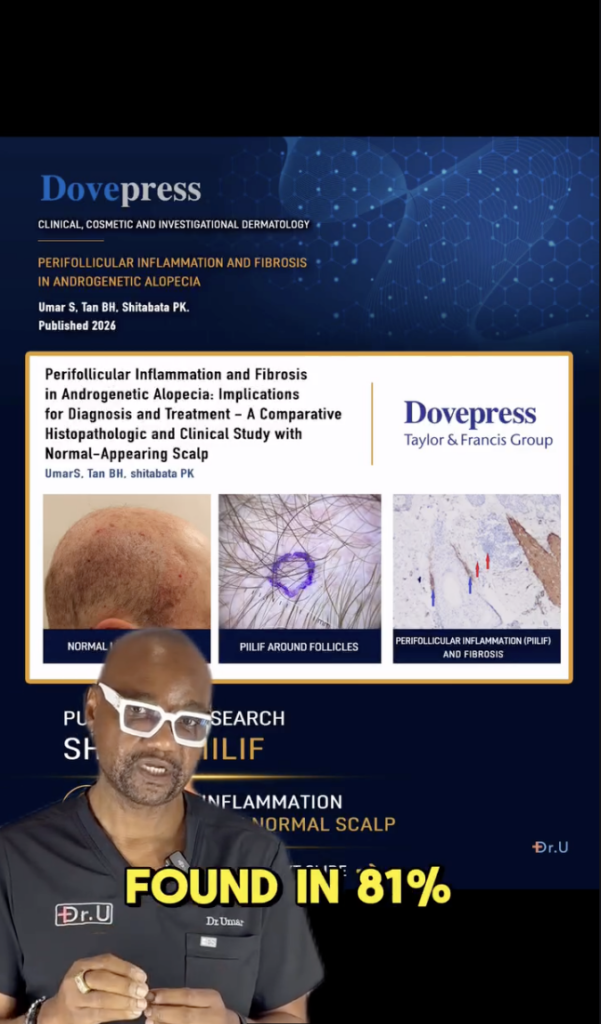
What the PIILIF Study Found
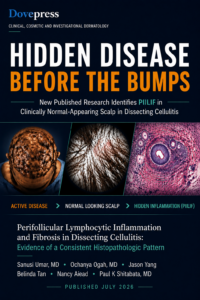
In the study population described in the video, PIILIF was found in 81% of normal-appearing scalp in patients with pattern baldness. Dr. Umar describes PIILIF as a hidden inflammatory and early fibrotic pattern that can resemble early scarring alopecia biology.
That finding is important because the scalp can look normal at the surface while the study identifies changes around the follicles. The short therefore shifts attention from what a bump looks like to what may be happening beneath the visible surface.
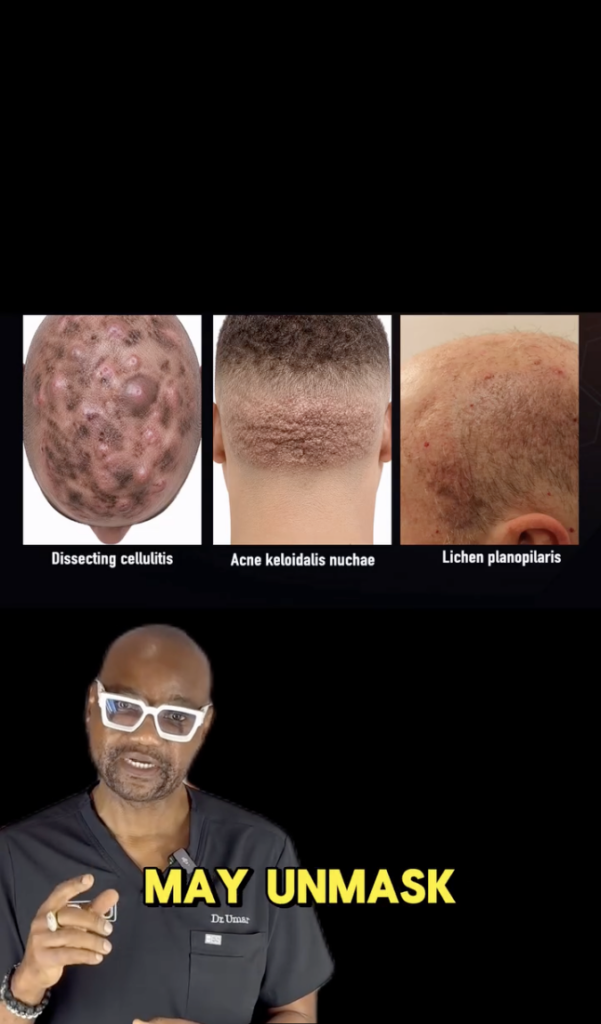
Acne Keloidalis Nuchae and Other Conditions Mentioned
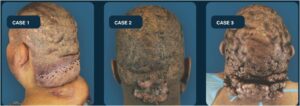
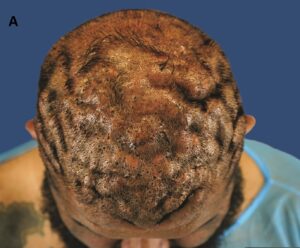
The supplied explanation states that surgical trauma may unmask this biology as conditions such as Acne Keloidalis Nuchae, or AKN, Dissecting Cellulitis, Lichen Planopilaris, or even Frontal Fibrosing Alopecia. The video does not say that every persistent bump after transplantation represents one of these conditions. Instead, it presents them as reasons not to treat a persistent pattern as routine by default.
When Persistent Bumps Deserve a Deeper Look
Dr. Umar closes with a concise instruction: “Check the scalp biology.” For persistent bumps after a hair transplant, that means resisting the urge to rely only on a surface-level assumption. The educational point is to recognize when further evaluation may be appropriate and to individualize the assessment.
The 81% figure applies to the study population described in the video. It should not be interpreted as the prevalence of PIILIF in every person with pattern baldness or in every person who develops bumps after a hair transplant.
Watch the Short Video
Watch on YouTube Shorts | Instagram | TikTok
Take the Next Step
Consultation: [[ADD CONSULTATION URL]]
Medical disclaimer: This content is for educational purposes only and is not medical advice. The study finding discussed here applies to the study population described in the video. Persistent bumps or abscesses require individualized clinical evaluation.
Further Reading
- https://dru.com/retrograde-alopecia-piilif-pattern-hair-loss/
- Umar S, Ton D, Carter MJ, Shitabata P. Unveiling a Shared Precursor Condition for Acne Keloidalis Nuchae and Primary Cicatricial Alopecias. Clin Cosmet Investig Dermatol. 2023 Aug 25;16:2315-2327. doi: 10.2147/CCID.S422310. PMID: 37649568; PMCID: PMC10464825. https://pubmed.ncbi.nlm.nih.gov/37649568/