
Persistent inflammation can look routine on the surface. Dr. Sanusi Umar explains why negative cultures, a poor response to antibiotics, and continued bumps may justify a closer look at the scalp’s underlying biology.
By Sanusi Umar, MD
Stubborn, inflamed bumps after a hair transplant are often treated as infection, simple folliculitis, pimples, or an ingrown hair. Those are familiar explanations, but they should not be automatic conclusions when lesions persist, cultures are negative, or routine antibiotics provide a poor response.
Persistent, inflamed lesions deserve a workup. Do not assume infection alone.
What PIILIF may reveal beneath the surface
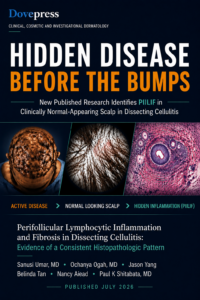
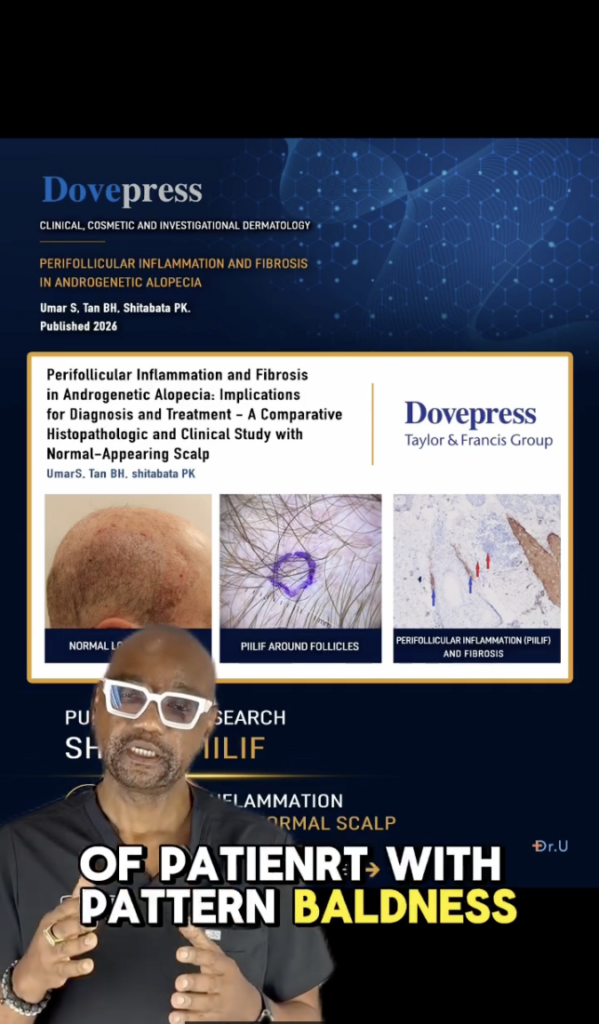
PIILIF refers to perifollicular inflammation and fibrosis. In the video, I describe it as a hidden inflammatory and early fibrotic pattern that can be present even when the scalp looks normal. Our published study found PIILIF in 81% of normal-appearing scalp among the patients with pattern baldness in the study population.
This finding does not mean every persistent bump is PIILIF. It means that continued inflammation may require evaluation of the tissue and follicular environment rather than an assumption that infection is the only possible cause.
Why persistent inflammation after surgery matters
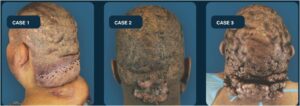
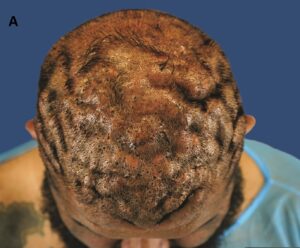
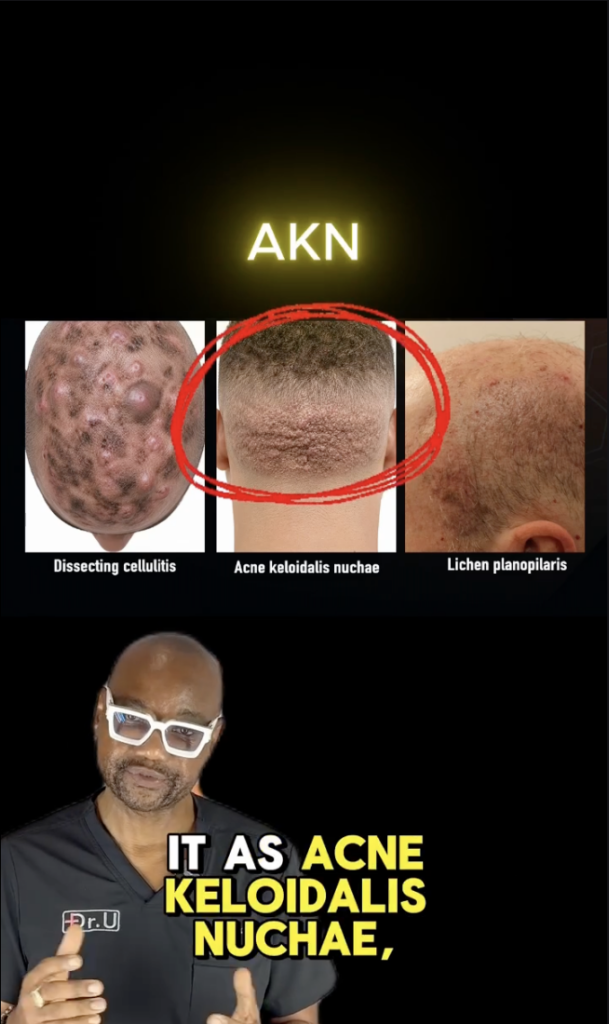
The short explains that surgical trauma may unmask an underlying phenotype when PIILIF exists beneath the surface. The clinical patterns named include acne keloidalis nuchae, dissecting cellulitis, lichen planopilaris, and frontal fibrosing alopecia. These possibilities are presented as reasons for careful evaluation, not as a diagnosis for every patient with postoperative bumps.
When inflammation or abscess-like lesions continue after a hair transplant, the message is simple: listen to the pattern. Persistent findings may not represent routine healing, and diagnosis should guide individualized, physician-led treatment.
A closer evaluation before and after transplantation
For higher-risk cases, the video recommends looking carefully with magnification, considering a biopsy when indicated, and ruling out primary scarring alopecia. When PIILIF is identified before transplantation, the stated goal is to treat the inflammation before surgery and protect the planned outcome.
After transplantation, persistent bumps deserve the same diagnostic discipline. A closer evaluation of scalp biology can help distinguish a routine process from a pattern that requires a different treatment plan.
Watch the Short Video
Take the Next Step
Learn more about PIILIF and persistent redness after hair transplantation
Medical disclaimer: This article is for educational purposes and is not medical advice. Diagnosis and treatment should be individualized by a qualified physician.
Further Reading
- https://dru.com/acne-keloidalis-nuchae-persistent-bumps-piilif/
- Umar S, Khanna R. Papular acne keloidalis nuchae treatment success using follicular unit excision. JAAD Case Rep. 2023 Jul 25;39:96-100. doi: 10.1016/j.jdcr.2023.07.013. PMID: 37621307; PMCID: PMC10445098.
https://pmc.ncbi.nlm.nih.gov/articles/PMC10904000/