


James’ acne keloidalis nuchae story carries a simple warning from Dr. Sanusi Umar: do not ignore persistent scalp changes when they are still small. When James returned to Dr. Umar years after an earlier visit, the bumps on the back of the head had changed dramatically, and he also had folliculitis decalvans on the top of his scalp.
The Bumps Were Once Much Smaller
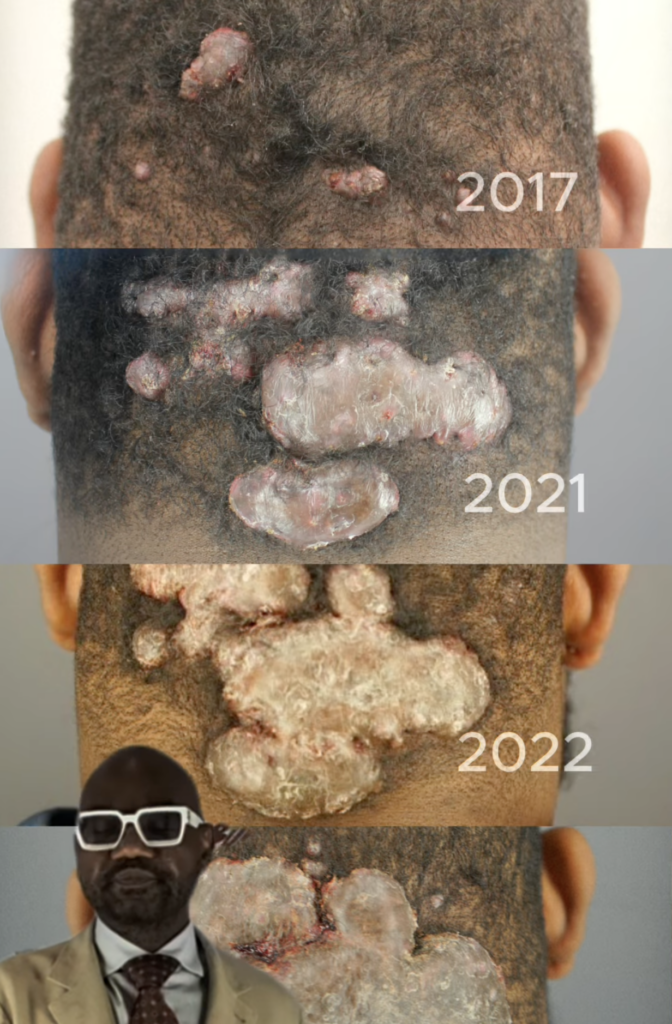
When Dr. Umar saw James again, James asked, “Doctor, don’t you remember me?” He explained that he had visited several years earlier, when the nodules at the back of his head were quite small. Dr. Umar reviewed the old medical record and found photographs from that first visit. At the time, the images showed only small nodules at the back of the scalp, and James did not yet have the condition now seen on the top of his head.
Dr. Umar says he had advised James to have the earlier lesions removed. James, however, had other priorities and did not move forward with that recommendation. By the time he returned, the clinical picture was very different. The matching caption describes the later lesions as painful, thick, and inflamed, affecting haircuts, comfort, daily routines, confidence, and self-esteem.
Old Photos Show Why Timing Matters
The earlier photographs gave Dr. Umar a direct comparison between James’ first presentation and what he saw years later. “Just speaks to how important it is to act on these conditions early,” Dr. Umar says.
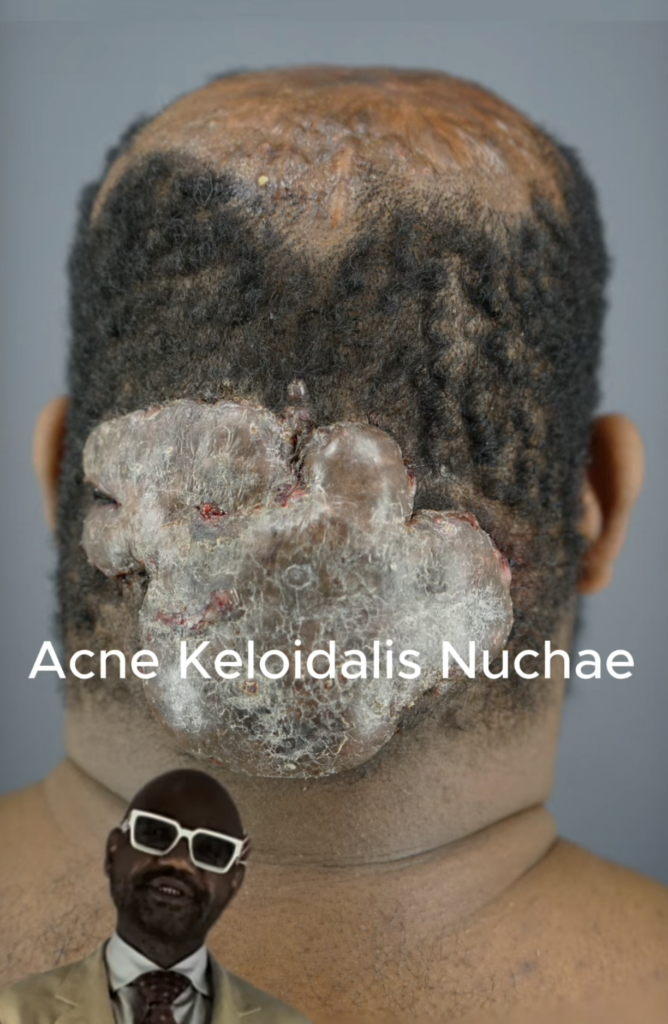
James’ case also shows why phrases such as bumps that won’t heal can require medical evaluation rather than assumption. In the video, Dr. Umar identifies folliculitis decalvans on the top of James’ head and papillomatosis nuchae at the back. The approved caption also frames the nape disease using terms patients may encounter such as scalp keloids, razor bump disease on the nape, and folliculitis keloidalis nuchae.
Dr. Umar Plans the Next Step
After James had tried other nonsurgical treatments, Dr. Umar decided that surgical removal was the best course of action for the lesions shown in this chapter. He explains that the plan is to address the large lesion at the back of the head first, then return to the folliculitis decalvans.
This short chapter stops at that decision point. It does not reveal what happens later. For now, James’ experience underscores the message emphasized by both the video and caption: when a scalp problem persists or changes, postponing care can allow a manageable concern to become a much larger burden.
Watch the Chapter
Watch James’ short video on YouTube
Take the Next Step
View the reel on Instagram or TikTok.
Free Consultationhttps://dru.com/akn-bumps-on-the-back-of-the-head-and-neck/
Medical Disclaimer
This article shares one patient’s experience for educational purposes only. Individual cases vary. It is not a substitute for medical evaluation, diagnosis, or treatment by a qualified healthcare professional.
Further Reading
- https://dru.com/acne-keloidalis-nuchae-james-case/
- Umar, Sanusi et al. “A Retrospective Cohort Study and Clinical Classification System of Acne Keloidalis Nuchae.” The Journal of clinical and aesthetic dermatology vol. 14,4 (2021): E61-E67.
https://www.ncbi.nlm.nih.gov/pmc/articles/PMC8142833/


