


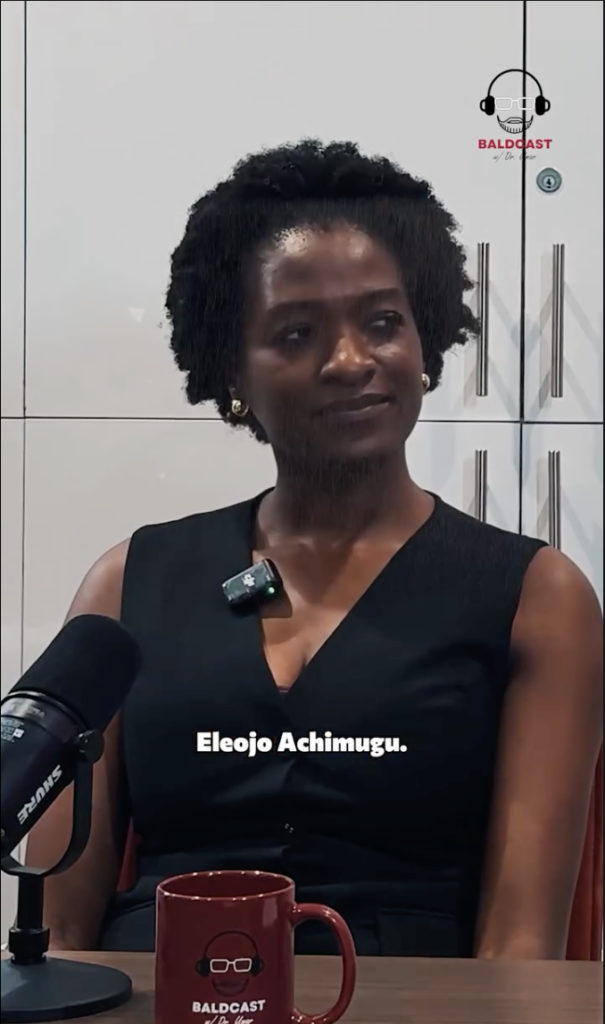
Dr. Eleojo Achimugu knows hair care from the physician’s side of the consultation. But when she developed lichen planopilaris, a form of scarring alopecia, she also experienced the uncertainty of being a patient whose condition was not responding to the treatments she tried. In this Baldcast introduction, Dr. Sanusi Umar presents her story in her own right, not as a promise of results for anyone else.
A Physician Facing Her Own Diagnosis
Dr. Umar introduces Dr. Achimugu as a practicing pediatric surgeon, hair specialist, and hair transplant surgeon based on Harley Street in London. Her medical background is central to the conversation, but the chapter turns the focus toward her personal experience of hair loss and a difficult diagnosis.
Her condition, lichen planopilaris, is identified in the video as LPP and as a scarring alopecia. Rather than describing an abstract clinical case, Dr. Umar opens the episode by recognizing the person behind the diagnosis and the treatments she had already attempted.
When Familiar Treatments Did Not Help
According to Dr. Umar’s introduction, the usual treatments had not produced the response Dr. Achimugu needed. He specifically mentions steroids and doxycycline, as well as other treatments that she will discuss during the longer conversation. This chapter does not detail the full treatment history, and it does not establish that those treatments are ineffective for other people.
For a specialist accustomed to treating patients, becoming the person searching for an answer brings a different perspective. The introduction sets up that contrast without claiming to know everything she felt or what she experienced beyond the details shared.
Why She Considered Another Approach
Dr. Umar says Dr. Achimugu subsequently tried a botanical formula he developed. He introduces what followed as something that surprised her, but this short chapter does not describe a specific outcome or provide evidence of effectiveness. That distinction matters: an individual account can be worth hearing without serving as proof that a product treats lichen planopilaris.
The Story Behind the Diagnosis
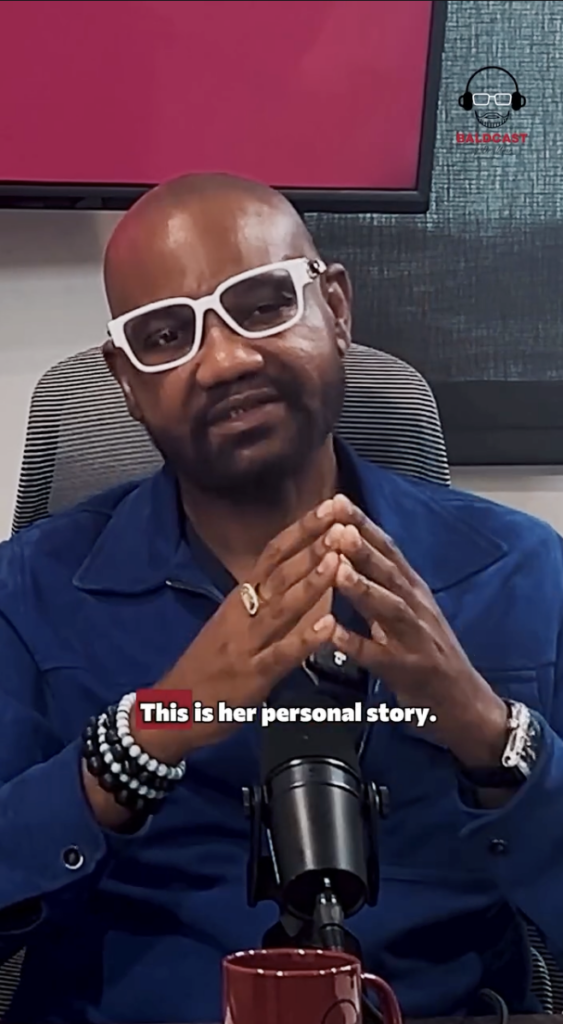
“This is her personal story,” Dr. Umar says, immediately adding that it is “not a medical claim.” His introduction frames the upcoming discussion around the experience of a fellow physician, the conventional treatments she tried, and her decision to explore something different.
The chapter leaves the details of what happened next for the full conversation. For now, it asks viewers to hear Dr. Achimugu’s account with both curiosity and appropriate caution, recognizing the difference between one person’s experience and a treatment recommendation.
Watch the Chapter
Watch on YouTube | Instagram | TikTok
Take the Next Step
Free ConsultationCondition or treatment information: [[ADD CONDITION PAGE URL]]
Medical Disclaimer
This article describes one person’s experience and is not medical advice or evidence that a particular approach will work for others. Gashee products are not FDA approved to diagnose, treat, cure, or prevent disease. Consult a qualified healthcare professional about diagnosis and treatment decisions.
Further Reading
- https://dru.com/what-is-lpp-aka-lichen-planopilaris/
- Umar S, Kan P, Carter MJ, Shitabata P, Novosilska M. Lichen Planopilaris Responsive to a Novel Phytoactive Botanical Treatment: A Case Series. Dermatol Ther (Heidelb). 2022 Jul;12(7):1697-1710. doi: 10.1007/s13555-022-00749-3. Epub 2022 Jun 8. PMID: 35674981; PMCID: PMC9276860.
https://pmc.ncbi.nlm.nih.gov/articles/PMC9276860/


